Why Brent is around $96 and not $140 Today
Analysis of the Oil Price Spikes and the Adaptions Africa has Made to Meet this Challenge
Market Reaction to Oil Price Spike
- A concrete, actionable takeaway founders and operators can apply this quarter
In early April this year, the physical oil market briefly looked as if it had run out of room. Dated Brent, the spot benchmark that tracks cargoes actually loading in the North Sea, briefly touched about $144 a barrel, above the peaks of 2022 and, on some readings, 2008. Futures whipped through an $86–$126 range in a single month.
The trigger was not a forecast. It was a global economic impact fact: after US and Israeli strikes on Iran at the end of February, the Strait of Hormuz, which had carried roughly a fifth of the world’s seaborne oil and a large share of its diesel and jet fuel, was effectively closed. Gulf producers shut in wells as tanks filled. The International Energy Agency later called it the largest supply disruption in the history of the oil market.
Six months on, Brent is trading around $96 after another overnight burst of US-Iran strikes and attacks on tankers leaving the Gulf. That is still an expensive barrel. It is not a $140 barrel. The difference is not that the war ended. It is that the system adapted — imperfectly, unevenly, and faster in some places than official models assumed — and that Africa has begun to look less like a passive victim of other people’s chokepoints and more like a place building its own buffers.
What $144 was pricing
April’s spike was a prompt-market panic. Inventories that had looked comfortable in February were being drained at several million barrels a day. Emergency stock releases from IEA members, including a record coordinated draw of about 400 million barrels over the crisis, had not yet fully arrived in the physical market.
Bypass pipelines from Saudi Arabia to Yanbu on the Red Sea and from the UAE to Fujairah were ramping up volumes, but they could not swallow a 15–20 million barrel-a-day hole in supply.
Diesel and jet fuel cracks blew out harder than crude, because Middle East product exports were stranded as surely as crude was. Dated Brent pulled far above the futures curve: the world was short oil *now*, not in December.
The $96 price spike this week is a somewhat different animal. The overnight escalation put a fresh risk premium back into the front months because inventories are thinner than they were in February and Hormuz traffic is still a fraction of peacetime volumes.
Visible commodity transits have been in single digits on some days. The IEA’s August report still saw a sizable third-quarter deficit. That is why prices jumped. It is not why they sit $40–$50 below the April high. The high was a market discovering it had almost no spare physical slack. Today’s price is a market that has already seen new supply pipelines, demand destruction, US export surges, dark shipping, strategic stocks, and a quieter African supply response aimed at filling part of the hole.
How the world absorbed the shock
Three adjustments did most of the work outside Africa. First, demand fell. High pump prices impacted, rationing was rolled out, cancelled flights and weaker Asian buying also affected. China, cut consumption by millions of barrels a day in the second quarter - painful, but it closed the gap from the demand side.
Second, Gulf producers used infrastructure built precisely for a Hormuz emergency. Saudi East–West and UAE Fujairah flows, plus some leakage through escorted or “dark” tankers, turned a near-total cutoff into a large but not total one.
Third, the Atlantic Basin threw barrels at the problem. US crude and fuel product exports hit records. Non-OPEC streams from the Americas kept moving oil into markets. Strategic reserve and commercial tanks were emptied to boost market supply.
By late July, observed global stocks had fallen on the order of 410 million barrels from the start of the war. Those buffers are why a six-month war did not produce a six-month $140 price. They are also why the latest flare-up still matters as the cushions are now much thinner.
None of that effort made Africa irrelevant. It made Africa’s own bottlenecks more expensive, and therefore more worth fixing.
Africa’s adaptation is downstream first
The continent’s historic vulnerability was never only that it produces crude. It was that it exported crude and imported refined fuel. When the Hormuz Strait tightened supply, East and Southern Africa discovered that a large share of their petrol, diesel and jet fuel imports sat on routes linked to the Gulf.
South Africa, Kenya and others reached for US and other Atlantic product. That was adaptation by necessity. The more interesting shift is adaptation by building.
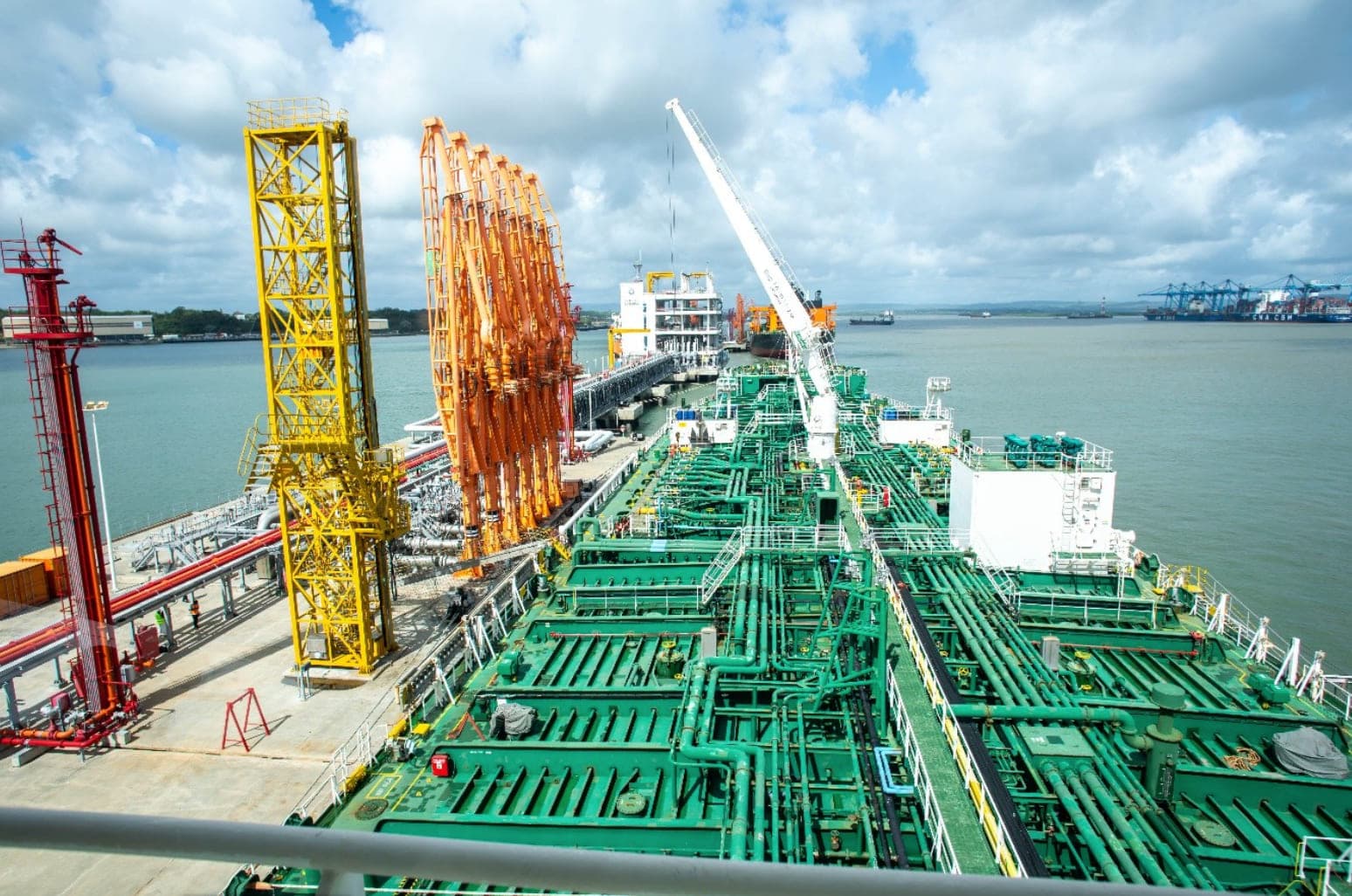
Nigeria’s Dangote refinery is the clearest example. After maintenance lifted distillation capacity toward 700,000 barrels a day, the plant has been running hard enough to flip parts of Nigeria’s trade balance.
Seaborne petroleum product shipments from Nigeria jumped; exports to Europe averaged about 130,000 barrels a day in the second quarter, against 15,000 in 2023. Shipments to other African markets were close behind. In some months Dangote became a leading jet-fuel supplier into Europe, filling a hole left by missing Middle East barrels. That does not add crude to the world. It does something more useful for African energy security: it turns West African crude into West African and Atlantic products, and it gives European buyers an alternative to Gulf jet and diesel.
The limits are honest. Nigeria still absorbs a huge share of the plant’s petrol. Imports have not vanished. A mid-year maintenance dip showed how quickly European jet balances notice when Lekki production slows.
Dangote is planning a second train that would take the complex toward 1.4 million barrels a day by 2028. Until that exists, Africa remains a net product importer. But the direction of travel is no longer theoretical.
East Africa is trying to copy the model before it has the steel in the ground. Aliko Dangote has proposed a roughly 700,000 barrel-a-day refinery at Lamu, on Kenya’s LAPSSET corridor, costed in the $16–20 billion range including port works, with groundbreaking talked about for September or October and a four-year build time. Kenya has been offered about 10 per cent equity; Ethiopia and Rwanda have been invited into a regional block.
The plant would be sized above current East African product demand, with room to supply neighbours that today import almost all their fuel after Kenya’s old Mombasa refinery closed in 2013. It is not a barrel in a tank today. It is a bet that the Hormuz shock made import dependence politically and commercially intolerable. If it is built, the Indian Ocean rim of Africa starts to look less like the last stop on a Gulf product voyage and more like a refining node of its own.
Upstream, the numbers are smaller and still matter at the margin. Ghana has begun to reverse a six-year production slide: Jubilee output has been lifted by new wells, with TEN and Sankofa contributing, and Accra has lined up billions in partner investment for more drilling.
Angola has stabilised crude production at around 1.1 million barrels a day after years of decline, with incremental offshore projects adding tens of thousands of barrels rather than millions. Uganda’s Lake Albert developments are moving from paper toward first oil. None of this replaces a closed Hormuz. All of it reduces the share of African demand that must be met by a tanker that might have to thread the Gulf or pay a war-risk premium.
Power as the other half of energy security
Fuel is only one exposure seeing development in Africa. When diesel is scarce, African grids and mines burn more of it. That is why the quieter infrastructure story of 2026 is electricity. Ember estimates Africa is on track to install a record 17 gigawatts of solar this year, up about 45 per cent, with roughly three-quarters of it distributed — rooftops, mines, commercial sites that official capacity statistics often miss.
The scale of development equals around 100,000 panels a day.
Thirty-six of 54 countries are expected to set national installation records. South Africa, Egypt, the DRC, Algeria and Morocco lead the headline totals; the fastest percentage jumps are in places that used to be footnotes.
Hydro remains the backbone in the Nile, Congo, Zambezi and West African basins, and the more interesting projects are hybrids: solar bolted onto existing hydro plants, as Zambia has begun to do, so that dry-season shortfalls do not automatically become diesel shortfalls.
This is not a replacement for crude. It is a reduction in the oil intensity of growth. Every megawatt that keeps a mine or a city off a generator is a barrel that does not have to clear a chokepoint.
The investment pattern is still lopsided. Most panels are imported from China. Local manufacturing is rising in Egypt and Tanzania but often aims at export markets. Capital is scarce relative to the need. None of that cancels the point: high imported-fuel prices have accelerated decisions that cheap Gulf product had postponed.
Oil Supply Strain a Catalyst, not hurdle
It would be sentimental to call Africa energy self-sufficient. It is not. OPEC still sees African refining additions this decade in the high hundreds of thousands of barrels a day, not the millions required to match demand. The Lamu project can slip, Dangote’s second Nigerian train can slip, Ghana’s wells can disappoint. Solar without storage and transmission is a daytime resource. Hormuz still sets the global price of the barrel that Johannesburg and Nairobi burn when local plants are down.
The better reading of 2026 is narrower and more useful. The April $144 oil price was a market with no time to build alternatives and almost no unused infrastructure. The September $96 print is a market that has already rerouted Gulf oil around the strait, destroyed some demand, emptied tanks, and discovered that a Nigerian refinery and a wave of African solar can take the edge off a product and power shock even when they cannot fix the crude balance.
The latest spike shows the risk premium is alive. The gap below $140 shows the adaptation is real.
If the war lasts, Africa will still pay more for energy than it should. It will also keep pouring concrete at Lekki and, if the politics hold, at Lamu; keep drilling at Jubilee; keep clipping solar onto factories that used to wait for diesel. That is not a finished energy continent. It is a continent that has stopped treating the Strait of Hormuz as someone else’s problem that it can only consume. The turmoil did not create that instinct. It made it expensive to ignore.