Former Goldman Sachs banker turns to Africa's funding gap
Grace Legodi has worked on both sides of the finance industry. She studied finance at the University of Cape Town, worked in mergers and acquisitions at Goldman Sachs in New York and Johannesburg, and later moved into venture capital and entrepreneurship development. She is now using that experience to fund early-stage businesses in Southern Africa
Former Goldman Sachs banker turns to Africa's funding gap
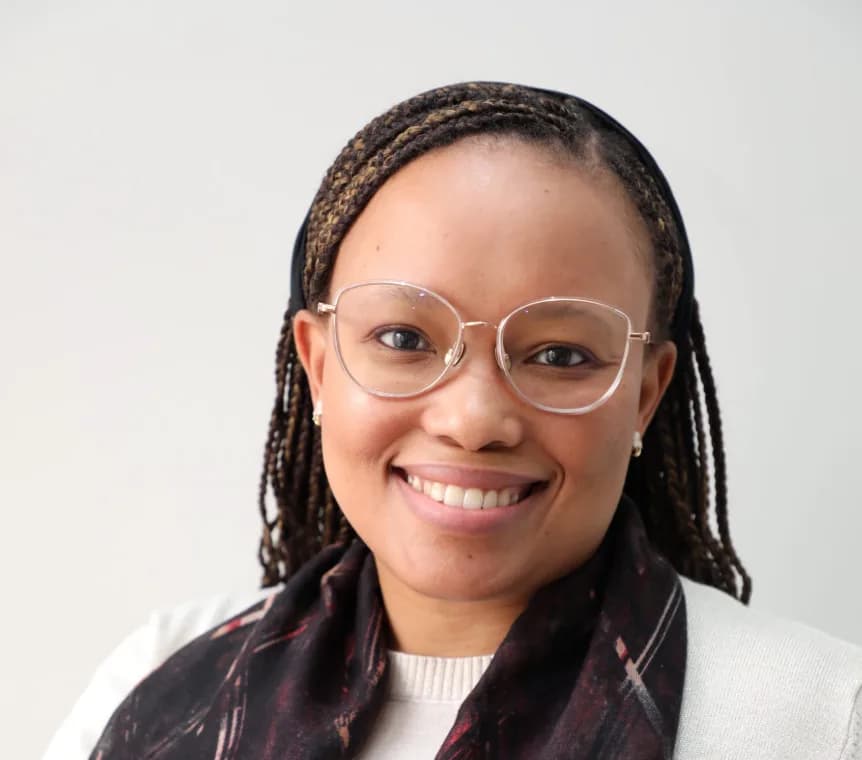
Grace Legodi has worked on both sides of the finance industry. She studied finance at the University of Cape Town, worked in mergers and acquisitions at Goldman Sachs in New York and Johannesburg, and later moved into venture capital and entrepreneurship development. She is now using that experience to fund early-stage businesses in Southern Africa through Keyo Ventures, the investment firm she founded in 2023. Keyo invests in businesses operating in electric mobility, water, waste management, sustainable agriculture and other parts of the green economy. These businesses often have a problem when they need to raise money. They may already have customers, revenue and assets, but they are still too early for banks. At the same time, they can require too much capital for traditional venture capital investors, which generally favours businesses that can grow without large investments in physical infrastructure.
“Too capital-intensive for equity VC, too early for a bank. That gap is exactly where we operate,” Legodi said. Keyo’s initial cheques range from R2 million ($125,000) to R3 million ($187,500). The firm focuses on revenue-generating assets and can increase its funding as businesses show stronger performance and sustainability. Legodi says debt is not always the answer for a young business. A company that is still developing its product may be better suited to grants, competitions or customer revenue. Equity becomes more useful once the company has shown that there is demand for its product, while debt makes more sense once the business has a proven model and enough cash flow to repay it. “We do not believe that debt is always the right instrument for an early-stage African business,” she said.
Keyo’s approach to funding
One of Keyo’s investments is Zimi Charge, a South African company building electric-vehicle charging infrastructure. Keyo provided funding for the infrastructure rollout, while a development finance institution provided quasi-equity for staffing and working capital. Legodi said Keyo is not trying to replace equity investors. “We come into the market as a complementary debt provider, not a replacement for equity,” she said. The approach is aimed at companies where growth requires spending money on physical assets before the resulting revenue comes in. This is common in sectors such as electric mobility, water, waste and agriculture.
Why companies struggle to access institutional capital
Legodi says there are four issues she regularly sees when smaller businesses try to raise institutional funding. These are revenue thresholds, minimum cheque sizes, currency mismatches and lengthy due diligence. Institutional investors may require businesses to reach a certain level of revenue before they will invest. Their fund sizes can also make smaller deals less attractive. There is also the currency issue. An investor may have dollar-denominated capital while a business earns its revenue in rand or another local currency. This can leave the business exposed to currency risk. The investment process can also take too long. Legodi says institutional due diligence can take as long as 24 months before funding reaches a business. For an early-stage company, two years is a long time to wait for funding.
“Some of the most promising early-stage businesses in the green economy are structurally too small, too young, or too resource-constrained to access institutional capital,” Legodi said. Keyo uses technology to track the performance of the companies it invests in. It integrates with portfolio companies’ operational systems to collect day to day data and monitor areas such as revenue, productivity and risk. But Legodi says funding alone is not enough. “You can’t just put money into businesses and hope for the best,” she said.
R2 million helped Keyo secure R35 million
Keyo also had to raise capital for itself. The firm received R2 million ($125,000) in catalytic funding through Anglo American’s Impact Finance Network. That helped it secure a R35 million ($2.19 million) commitment from its first institutional investor. The R35 million commitment was about 17 times the size of the original R2 million investment. Legodi said the initial funding helped give the institutional investor enough confidence to commit a larger amount. This is one of the problems faced by new fund managers. They need a track record to attract institutional investors, but they need capital in order to build that track record. Keyo has been fundraising for three years and remains in discussions with development finance institutions, corporates and foundations. It is also looking at family offices and philanthropic capital, which Legodi says can sometimes move faster.
Keyo wants to expand across SADC
Legodi grew up in Lebowakgomo in Limpopo. Her parents were a teacher and a social worker, and she later received a scholarship to study at UCT. She became the first Black captain of Capricorn High School and its valedictorian before completing a master’s degree in innovation and entrepreneurship at École des Hautes Études Commerciales de Paris. Her focus is now on businesses operating in sectors such as energy, transport, water, waste and food. “The green economy needs to take off, and we want to see that happen across the region,” she said. Keyo is targeting R500 million (31.3 million) in accelerating the adoption of the green economy value chain across Southern Africa firm currently has six portfolio companies and a pipeline worth more than R300 million ($18.8 million). Expanding across the region will bring additional currency and regulatory challenges. Keyo is exploring fund structures that would allow it to invest in local currencies rather than putting hard currency risk onto the businesses it funds.
Legodi also wants founders to have a better understanding of the funding options available to them. “When we reach R500 million ($31.3 million) and expand across the region, what we would really want to see change is founder awareness,” she said. For Keyo, the focus is on finding businesses that need capital to buy assets, expand operations and generate more revenue, but do not yet fit the requirements of traditional lenders or venture capital investors. The firm now has six portfolio companies, a pipeline worth more than R300 million and plans to invest R500 million into electric vehicles as it expands across Southern Africa.