Chowdeck's next challenge is making its growing delivery business pay
Chowdeck started in Lagos in 2021 with three motorbikes, three riders and two restaurants. The business has since expanded into Nigeria and Ghana, and the company now reports about 1.2 million orders a month, more than 800,000 active customers and nearly 9,000 vendors.
Chowdeck
Chowdeck started in Lagos in 2021 with three motorbikes, three riders and two restaurants. The business has since expanded into Nigeria and Ghana,
AI-generated summary. It can miss nuance — read the full story above for the complete picture.
Chowdeck started in Lagos in 2021 with three motorbikes, three riders and two restaurants. The business has since expanded into Nigeria and Ghana, and the company now reports about 1.2 million orders a month, more than 800,000 active customers and nearly 9,000 vendors. Those numbers tell part of the story. The other part is what it takes to keep a delivery business running when thousands of orders are moving between restaurants, shops, riders and customers.
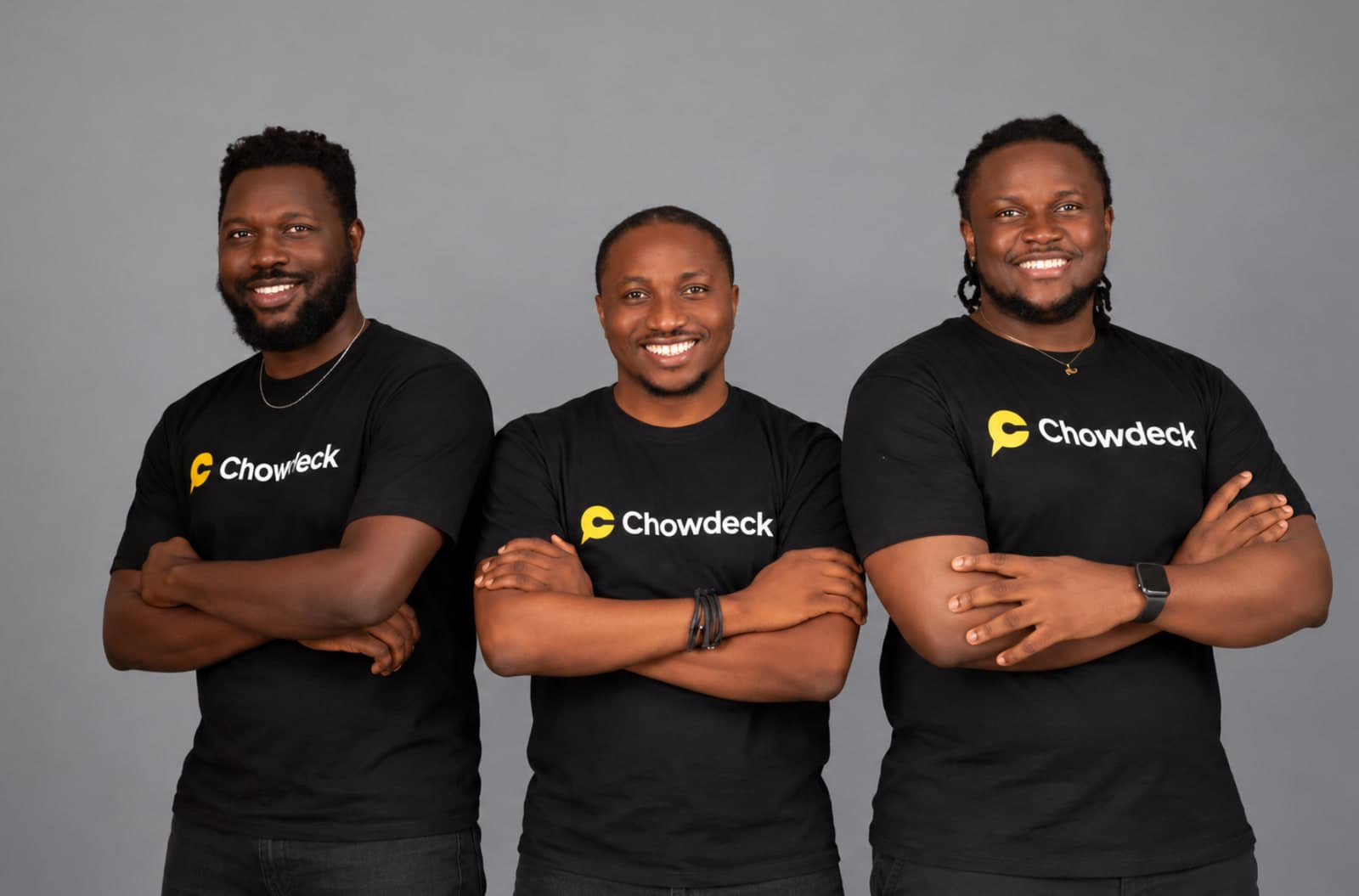
The Nigerian startup, founded by Femi Aluko, Olumide Ojo and Lanre Yusuf, has expanded beyond food delivery into groceries, parcel delivery and merchant services. Its founders have also joined Endeavor's global entrepreneur network, which connects business owners with experienced entrepreneurs and investors. For Chowdeck, the work ahead is less about getting people to download an app and more about making sure the business behind it works.
Every order has a cost
“Growth can put pressure on a company as easily as it can create opportunities.”
A customer sees a menu, places an order and waits for a rider. Chowdeck has to coordinate the restaurant, the delivery and the payment, while dealing with problems when something goes wrong. If a restaurant is slow to prepare an order, a rider can spend more time waiting. If an address is difficult to find, the delivery takes longer. A missing item can mean a complaint, a refund or a customer who decides not to order again.
These are ordinary problems in food delivery, but they matter when a company is handling more than a million orders a month. Chowdeck must keep enough riders available, maintain relationships with restaurants and make sure customers can get help when deliveries go wrong. It also needs to keep the cost of fulfilling orders under control. The number of orders is useful, but it does not show how much the company earns from each one after paying the costs of running the service.
More than food on the menu
Chowdeck has added groceries, parcel delivery and services for merchants to its business. There is a practical reason for doing this. The company has already built a customer base and a network of riders and vendors. Offering more services gives customers additional reasons to use the platform and gives businesses more ways to reach them. But the services are not interchangeable. A restaurant meal needs to be collected soon after preparation. Grocery orders require accurate picking and handling, while parcels involve different collection and delivery arrangements.
Each service brings its own costs and customer expectations. Chowdeck has not publicly disclosed how much revenue these newer services generate or whether they are profitable. Without that information, it is difficult to judge how much they contribute to the company's overall performance. The important question is whether they bring in enough additional business to justify the resources required to run them.
Ghana adds another layer of work
Chowdeck entered Ghana in 2025, taking its operations beyond Nigeria. Expanding into another country involves more than making the app available to new customers. The company has to recruit local vendors, build a reliable rider network and understand how people order and pay in each market.
Even finding an address can be a problem. In some areas, customers give directions using a nearby shop or landmark rather than a street number. Riders need to work with those directions, often while dealing with traffic and tight delivery schedules. The company must also decide how much to invest in each city. A new location needs enough customers, restaurants and riders to make the service useful. If orders are too spread out, delivery costs can become difficult to manage. Opening in more cities may increase the company's reach, but it also raises the cost of running the business.
What Endeavor brings to the table
Chowdeck's three founders have joined Endeavor's global entrepreneur network, which gives members access to business leaders, mentors and other founders who have experience scaling companies. That access could be useful as the company grows beyond the stage where its founders can oversee every part of the operation themselves. Decisions about senior hires, management systems, expansion and spending become more complicated as a business grows.
Other founders may be able to share what worked for them and where they made expensive mistakes. However, the membership is not the same as a funding round, and it does not guarantee that Chowdeck's expansion will succeed. The founders still need to make the right operating and financial decisions.
The figures that matter next
Chowdeck has built a sizeable operation since its early days in Lagos. It now serves customers in Nigeria and Ghana and has expanded into services beyond food delivery. What is less clear from the publicly reported figures is how much money the business makes, how much it spends on each delivery and which services contribute most to its earnings.
Those details matter because growth can put pressure on a company as easily as it can create opportunities. More orders require more coordination, while entering new cities means spending money before demand is fully established. Chowdeck needs restaurants to keep using its platform, riders to complete deliveries efficiently and customers to return. It also needs enough money left over from each transaction to pay its operating costs. The company has already shown that it can attract customers and expand its network. Its next task is to show that it can turn that activity into a business that pays its way.