
Zero Waste Store: Pioneering a Mindful Retail Revolution for a Sustainable Future
An unassuming store painted in calming earthy tones stands as a symbol of conscious consumption in the heart of an affluent Windhoek suburb, nestled at a street corner. The Zero Waste Store, boldly printed on a prominent sign, declares its mission. This store, located next to a chic restaurant and at the crossroads of two

Zero Waste Store: Pioneering a Mindful Retail Revolution for a Sustainable Future
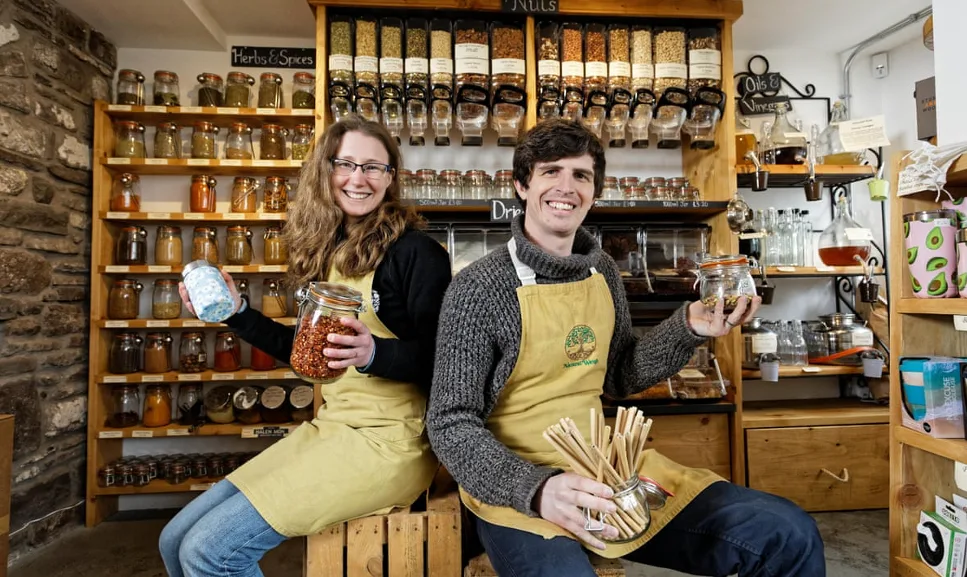
An unassuming store painted in calming earthy tones stands as a symbol of conscious consumption in the heart of an affluent Windhoek suburb, nestled at a street corner. The Zero Waste Store, boldly printed on a prominent sign, declares its mission. This store, located next to a chic restaurant and at the crossroads of two bustling thoroughfares, one of which is named after Namibia’s independence icon, Sam Nujoma, is poised to spark a subtle yet profound transformation in retail practises across the country.
As soon as one steps through the door, a distinct aroma envelops the senses — a blend of aromatic spices and natural scents. It is immediately clear that this shopping experience is unlike any other. This is a retail realm where products emerge without packaging, providing an oasis for those committed to a waste-free lifestyle.
Rows of vibrantly coloured glass jars and containers await within its welcoming confines, accompanied by plastic dispensers designed with recyclability in mind. Patrons engage in a refilling ritual, armed with their collection of containers, bottles, and jars. Household essentials such as edibles, detergents, and oils find their way into these containers, forming a harmonious symphony of sustainability.
Brigitte Reissner, the visionary owner of this one-of-a-kind establishment, credits her inspiration to Bea Johnson, an American environmental activist known for her support of Zero Waste Living. “Bea’s words were a revelation,” Reissner says, recalling Bea’s enlightening discourse during her visit in June 2018. Her four-person family produces only a half-litre of waste per year! I wondered if such an accomplishment could be repeated and set out on a quest to find out.”
Curiosity piqued, Reissner delved into online resources detailing zero-waste stores and visited several South African establishments. Her goal was to not only join the ranks of environmentally conscious businesses but also to start her own personal journey towards a waste-free existence. The Zero Waste Store opened its doors in July 2019 after extensive research and meticulous planning. Today, a steady stream of about fifty customers per day attests to the store’s growing local popularity.
The concept of reducing waste generation to protect the environment is central to the zero-waste lifestyle ethos. The Bokashi Food Waste Recycling Bins are promoted in a dedicated display beneath the gleaming glass spice dispensers. Brigitte explains how they work: “These bins act as composting catalysts.” Organic waste accumulates on a daily basis in the bin, along with bran, wood chips, molasses, and enzymes. After three weeks of rest, a liquid concentrate appears, serving as potent plant nourishment. The residual solids decompose into nutrient-rich compost, which feeds verdant life.”
Emilia Christian, who has worked at the Zero Waste shop since its inception, emphasises a fundamental benefit of this shopping paradigm: the ability to obtain precisely what one requires. Conventional retail frequently coerces us into purchasing in excess. Zero Waste Shopping, on the other hand, is a customised experience. Flour, spices, or any other desired item is weighed, placed in one’s container, and purchased, reducing waste and increasing financial efficiency.”
On a Saturday morning, Karola Redecker, a regular customer, appears with her teenage daughters in the heart of the store. Over the course of three years, she has incorporated the Zero Waste Store into her daily routine, demonstrating her dedication to environmental stewardship. She shares her perspective, “This lifestyle demands effort, yet I am determined to model responsible conduct for my daughters, nurturing their commitment to safeguarding our environment.”
Biodegradable soaps are prominent among the store’s prized offerings. These soaps, made from locally sourced organic ingredients, have the potential to mitigate the dangers posed by chemical-based counterparts, which frequently infiltrate and contaminate groundwater reservoirs. Brigitte extrapolates, “By considering the larger picture, we realise the collective impact.” Every day, chemical agents from countless households enter our sewage systems. These insidiously seep into our groundwater, causing contamination to persist. While we may be a single entity, if more people embrace this consciousness, a ripple effect can occur.”
However, getting the Zero Waste Store off the ground has not been easy. Convincing manufacturers to use sustainable packaging and delivery methods is a formidable challenge. The uphill battle is convincing suppliers to join the “zero-waste train,” which is hampered by some manufacturers’ insistence on using plastic packaging.
Brigitte believes that education is crucial in developing environmental awareness. While acknowledging the inherent difficulties and occasional inconveniences of a zero-waste lifestyle, she emphasises its ability to reshape attitudes and instil ecological mindfulness. Brigitte actively participates in outreach initiatives as part of her mission to raise awareness. A kindergarten class recently visited the store, encapsulating her philosophy, “By nurturing our youth’s understanding, we endow them with the knowledge to catalyse positive change within their familial and communal spheres, emphasising the paramount importance of waste reduction.”
A symphony of scents and mindful choices weaves a tapestry of sustainability in the tranquil space of the Zero Waste Store. Brigitte Reissner’s aspirations radiate outward from this unassuming Windhoek corner, beckoning a future in which a humble store becomes a nexus of transformation, inspiring a collective pledge to protect the planet for future generations.