While government debt is decreasing, SEO stress is increasing
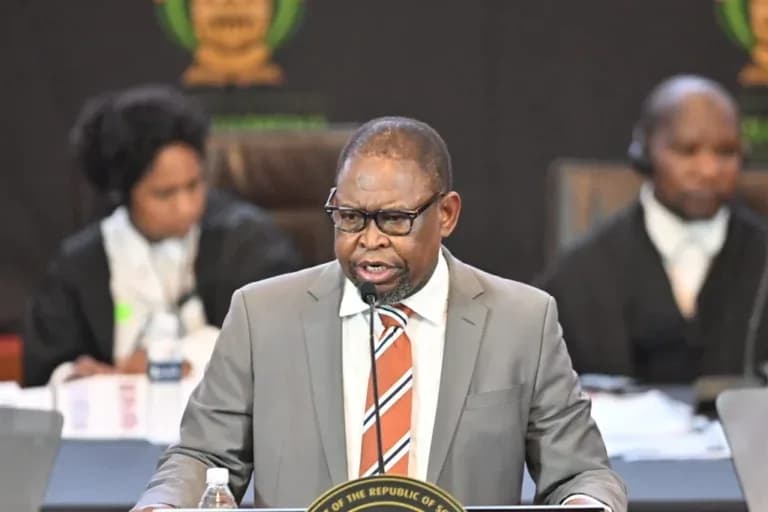
Despite signs of increasing stress among state-owned enterprises, Finance Minister Enoch Godongwana delivered his second Medium-term Budget Policy Statement (MTBPS) on Wednesday, calling it a "positive" document. Transnet, Denel, and Sanral all received billions, while Eskom's R400 billion debt remains unresolved. Prior to the main Budget in February, the MTBPS updates Treasury's economic forecasts, provides
While government debt is decreasing, SEO stress is increasing
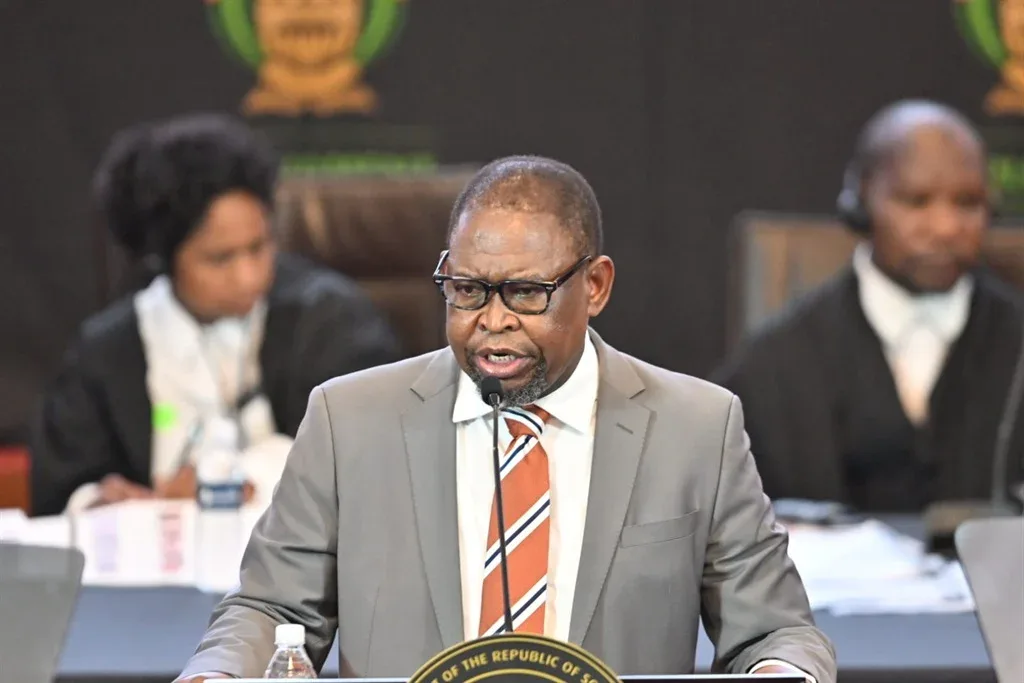
Despite signs of increasing stress among state-owned enterprises, Finance Minister Enoch Godongwana delivered his second Medium-term Budget Policy Statement (MTBPS) on Wednesday, calling it a “positive” document. Transnet, Denel, and Sanral all received billions, while Eskom’s R400 billion debt remains unresolved.
Prior to the main Budget in February, the MTBPS updates Treasury’s economic forecasts, provides policy guidance, and adjusts various government department budgets.
Here are some highlights from the MTBPS this year:
South Africa’s debt situation is improving.
Government debt has skyrocketed in recent years, rising from R577 billion in 2007/08 to R4.75 trillion this year. Because of volatile financial markets, which have raised interest rates, the cost of repaying this debt will be nearly R6 billion higher than anticipated in February.
However, tax revenue has been surprisingly high, owing primarily to high commodity prices, which have resulted in massive profits for mines.
Gross tax revenue for the current fiscal year is now expected to be nearly R93 billion higher than predicted in the February Budget, and nearly R84 billion higher than last year.
This was despite a disappointing VAT take, which is expected to be nearly R5 billion lower than budget due to larger-than-expected refund payments. During the first half of the year, these refunds averaged R25.1 billion per month. According to the Treasury, this is due to increased capital expenditure, particularly in the finance and manufacturing sectors.
However, corporate tax is expected to be R62.8 billion higher than budget. Aside from high mining taxes, Treasury reports that manufacturing and finance companies are profiting more.
Some of the increased tax revenue is being used to reduce government borrowing.
This, combined with relatively conservative government spending in recent years, is easing fiscal pressure.
Treasury now expects government revenue to exceed government spending (excluding interest payments) for the first time in 15 years by the end of 2023/24. By next year, the “primary budget surplus” is expected to reach 0.7% of GDP.
This year, gross loan debt is expected to stabilize at 71.4% of GDP, two years earlier and at a lower level than previously predicted. South Africa will borrow “only” R411.2 billion this year, compared to the Treasury’s earlier estimate of R484.5 billion. While gross loan debt is expected to rise to R5.61 trillion in 2025/26, the fiscal deficit is expected to fall from 4.9% of GDP in 2022/23 to 3.2% in 2025/26.
This will depend on continuing strong tax receipts.
“Fiscal consolidation will soon come to a close,” says Treasury, which has hiked its spending plans for the next two years, to include more for health, education, free basic services, security and infrastructure – as well as to cover the extension of the Covid-19 social relief of distress (SRD) grant.
E-tolls
The government will also provide R23.7 billion to the South African National Roads Agency Limited (Sanral) this year to end the decade-long dispute over electronic tolling systems (e-tolls) on Gauteng’s freeways.
The system was launched in late 2013 to fund the Gauteng Freeway Improvement Project (GFIP) through e-tolls via mobile devices and gantries. However, it was immediately rejected by several Gauteng motorists, leaving Sanral with a significant debt hole and jeopardizing its ability to raise funds through the bond market and other means.
Godongwana announced that the government will pay 70% of sanral’s R47 billion debt, with Gauteng agreeing to pay 30%. Gauteng will also cover the costs of maintaining the project’s 201 km of highways, and any additional investments must be funded through existing e-tolls or new toll plazas- “or any other revenue source within their area of responsibility”.
In essence, Gauteng must decide whether or not to continue with e-tolls.
There are plans to assume Eskom’s debt, but no details have been released.
Eskom is the biggest known risk to the economy and the public finances,” says Godongwana.
He warned that heavy load shedding is wreaking havoc on our economy
“A lower debt burden will enable Eskom to implement a viable unbundling process and make resources available for investment in critical electricity supply and transmission infrastructure.”
The government intends to assume up to two-thirds of Eskom’s R400 billion debt, but it is still negotiating the details with Eskom’s lenders. Treasury is also waiting for the electricity regulator to make a decision on Eskom’s tariff increase for next year, which will be announced in December, before deciding how much debt to incur.
The transfer will be subjected to strict conditions, including the unbundling of Eskom into three entities, as well as more stringent cost management and bad debt resolution.
It will not provide more information about the debt transfer until next year’s budget. Investors who were expecting clarity this week will be disappointed.
Wage increase for civil servants
As wage negotiations over civil servant wage increases continue to stall, and the first strike is expected next week, the government has made no indication that it will budge.
It now intends to unilaterally implement a 3% wage increase in the public sector by invoking Section 5 of the Public Service Act, and Treasury confirmed on Wednesday that no more than that has been budgeted for. Cosatu is requesting a 10% raise.
This year, public sector wages account for 31.4% of government spending, a decrease from 34.5% in 2019/20. Between 2015/2016 and 2021/22, employment in the health sector increased by more than 18 500, while employment in the rest of the public sector (excluding education) decreased by about 30 000.
The SRD grant has been extended for another year.
There has been no final decision on the long-term replacement of the SRD grant, which is currently paid to 7.4 million people. The temporary grant will be extended for one year, until March 2024.
“Given the large cost of extending this grant, increases to other social grants in 2023/24 will be slightly below inflation and other social welfare priorities may remain unaddressed,” Treasury warned.
It stated that the grant’s permanent extension, or similar new grant, must be matched by a new tax, spending cut, or a combination of the two. If the current grant value and take-up rate remain constant, the grant cost would rise by nearly 9% per year to R64.9 billion in 2030/31.
“Without a permanent source of funding, this would threaten the sustainability of the public finances.”
Transnet receives nearly R6 billion
The government will pay Transnet R5.8 billion, half of which must be used to repair infrastructure damaged by the recent floods in KwaZulu-Natal, and the other half to repair and maintain freight rail locomotives.
More money for infrastructure
Treasury expects to increase infrastructure budgets over the next three years as South Africa’s debt position stabilizes. Building and other fixed structure spending is expected to nearly double from R66.7 billion in 2022/23 to R112.5 billion in 2025/26.
Sanral’s R62 billion projects to build new roads infrastructure and rehabilitate key routes are among the existing large infrastructure plans, while the Passenger Rail Agency of South Africa plans to spend nearly R24 billion on rehabilitating vandalized and stolen rail infrastructure and on new trains. Over the next three years, the water boards will spend R27.7 billion, including R27.7 billion to upgrade pipelines in the Rand Water service area, including the Zuikerbosch system.
More funding for the police- and to avoid greylisting
Treasury has added R8.7 billion to the Department of Police’s budget, and more funds will be set aside for the National Prosecuting Authority, the Special Investigating Unit, the Financial Intelligence Centre, and the South African Revenue Service.
According to Ismail Monomait, acting director-general of National Treasury, it will be difficult not to be grey listed. However, he added that the new legislation will help South Africa take a “significant step forward.”
Godongwana stated in relation to state capture that, “as has been done with Bain, we will continue to take punitive administrative action against companies and individuals who have actively facilitated corrupt and irregular procurement activities.”
Denel may be awarded R3.4 billion for turnaround
Denel will receive nearly R205 million to repay urgent loans and may receive R3.4 billion if certain conditions are met to complete its turnaround plan.
Outlook
Due to load shedding and weaker exports, the Treasury reduced South Africa’s expected economic growth rate for this year from 2.1% to 1.9%. Over the next three years, real GDP growth is expected to average only 1.6%.
The government also anticipate that most of the windfall tax receipts from higher commodity prices will be lost over the next two years, and that personal income tax receipts will be limited by the weak labor market.
Nonetheless, it expects tax revenues to rise to R2.04 trillion, or nearly 25.4% of GDP, by 2025/26, up from R1.7 trillion this year. This will be due to “efficiency improvements” at the South African Revenue Service and a more broad-based corporate tax recovery.
Main Image:Jaco Marais/Netwerk24