
Where to watch Ramaphosa's SONA 2023 in real time
On Thursday, 9 February 2023, at 19h00, President Cyril Ramaphosa will deliver the State of the Nation Address (SoNA). The speech will be delivered before a joint session of the two houses of Parliament and will be webcast and aired on a variety of media, including news networks, radio stations, DStv, and live-streaming sites like
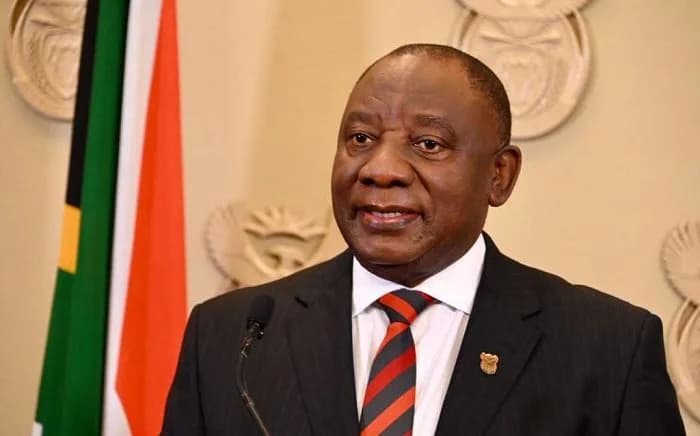
Where to watch Ramaphosa's SONA 2023 in real time
On Thursday, 9 February 2023, at 19h00, President Cyril Ramaphosa will deliver the State of the Nation Address (SoNA).
The speech will be delivered before a joint session of the two houses of Parliament and will be webcast and aired on a variety of media, including news networks, radio stations, DStv, and live-streaming sites like as YouTube.
President Cyril Ramaphosa will describe the government’s core policy objectives and deliverables for the next year, as well as identify problems and detail actions to unleash our nation’s potential, in his address.
The President will also emphasise what has been accomplished since his previous address in 2022 during his speech. He will also remark on the status of the Economic Reconstruction and Recovery Plan (ERRP).
The SONA may be seen from the following websites:
- Parliament TV
- ENCA
- SABC
- News24
- DStv channel 408
The SONA will also be live broadcast below. The event’s build-up show is already underway:
What to anticipate
On Thursday, South African President Cyril Ramaphosa will make his seventh state-of-the-nation speech, at a critical moment in his presidency.
Last year, an energy crisis that began in 2008 became substantially worse, and rolling blackouts were imposed for 102 consecutive days to keep the grid from collapsing, crippling the economy. There is also broad popular dissatisfaction with the country’s 33% unemployment rate, rising living prices, and the near-collapse of government services in many municipalities.
With next year’s elections certain to be the most highly contested since apartheid ended in 1994, Ramaphosa must find answers to the country’s numerous challenges in order to win a second term. He’ll give his address at Cape Town City Hall because parliament is still being rebuilt after a fire destroyed it.
These are some of the most important subjects that the president is expected to address.
1. Power Failures
Steps to reduce power outages and bring the struggling state power firm Eskom back on track are likely to be at the forefront of Ramaphosa’s address.
The administration has announced it is considering declaring a state of calamity to deal with the problem, and the president might elaborate.
He’s also likely to mention a proposal unveiled last year for the government to assume up to two-thirds of Eskom’s R396 billion in debt, with Finance Minister Enoch Godongwana due to disclose specifics of the rescue in the budget on February 22.
Households and businesses who build their own power producing capacity may also be eligible for incentives.
2. Government Reorganization
The ruling African National Congress resolved at its national conference in January to transfer management of many state businesses now controlled by the Ministry of Public Enterprises to line ministries, and Ramaphosa might outline the plan.
Among the proposals include having Eskom report to the energy ministry and transferring state logistics companies Transnet and South African Airways to the Ministry of Transport. The president has also faced requests to divide the Department of Mineral Resources and Energy and to merge certain minor agencies.
3. Wage Rates
Civil officials’ salaries have climbed by an annual average of two percentage points over inflation over the last decade, accounting for about a third of state spending. Nonetheless, unions representing state workers wanted 10% rises last year to counteract the rise in living costs.
The government declared that this was unsustainable and unilaterally issued a 3% salary increase. The impasse remains, and Ramaphosa might signal whether the government would dig in its heels or be willing to compromise. Ratings agencies have frequently identified the wage bill as a major fiscal concern.
4. Investment in Infrastructure
Ramaphosa has constantly advocated for additional investment in new train lines, highways, and other infrastructure to jump-start the economy and create employment.
With a number of state institutions and agencies failing to complete projects and returning funds to the National Treasury on a regular basis, the president may propose additional steps to compel them to spend their budgets. He’s also expected to renew demands for private enterprises to collaborate with the government on infrastructure projects.
5. Overcoming Crime
The government has made little headway in combating widespread crime, and the country’s murder rate remains among the world’s highest. No one has been held accountable for a recent spate of mass shootings, or for a period of civil unrest in 2021 that cost 354 lives.
Ramaphosa, who announced the recruitment of thousands of new police officers last year, is likely to announce other steps to strengthen law enforcement.