Vumatel operating profit jumps 57% after Vodacom deal
Vumatel’s operating profit climbed 57% to R2.16 billion in the year to 31 March 2026, with revenue rising 15.3% to R4.43 billion.
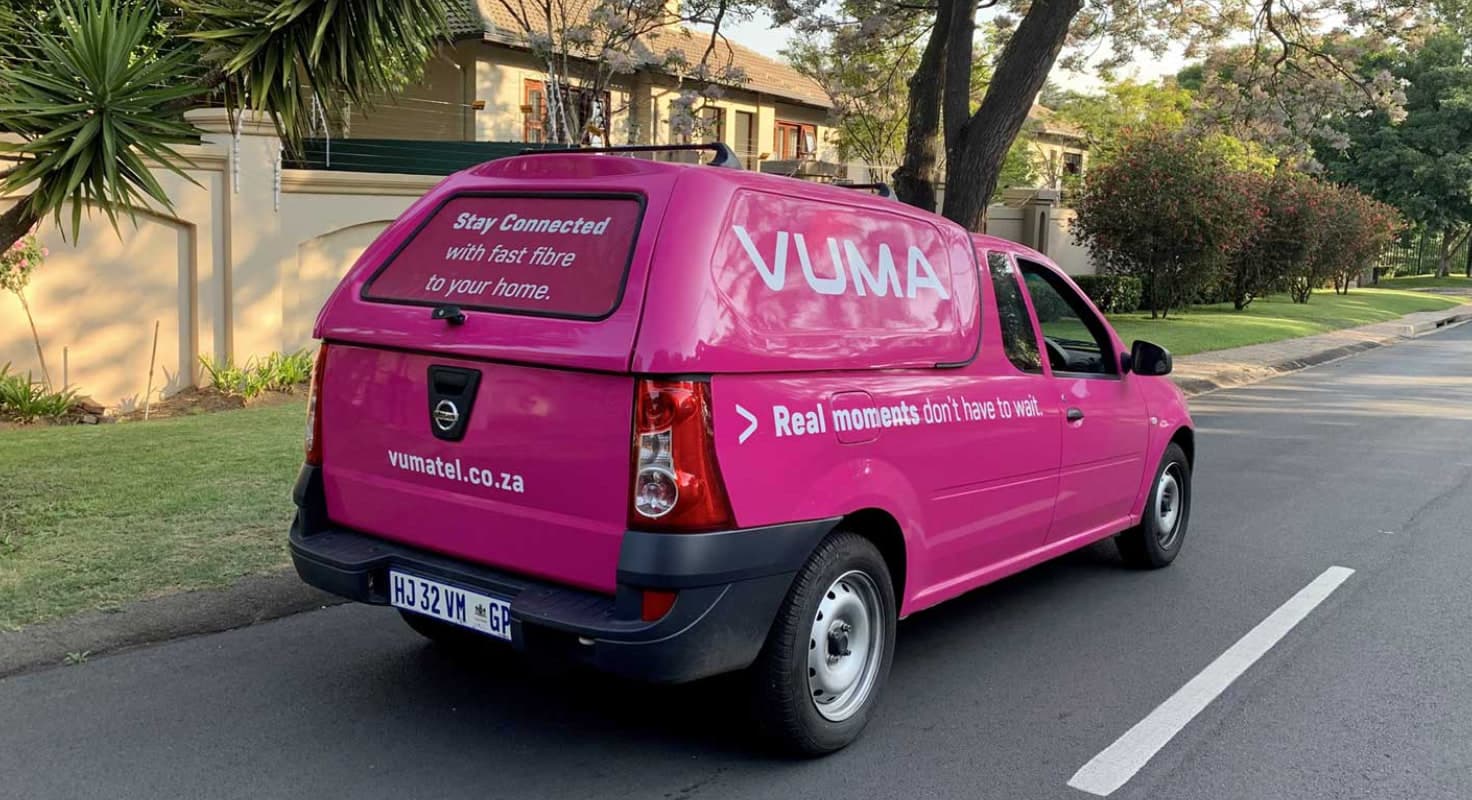
Vumatel
Vumatel’s operating profit climbed 57% to R2.16 billion in the year to 31 March 2026, with revenue rising 15.3% to R4.43 billion.The results cover the first few months of Vodacom’s ownership of a 30% stake in Maziv, the fibre group that owns Vumatel and Dark Fibre Africa (DFA).
AI-generated summary. It can miss nuance — read the full story above for the complete picture.
Vumatel’s operating profit climbed 57% to R2.16 billion in the year to 31 March 2026, with revenue rising 15.3% to R4.43 billion.The results cover the first few months of Vodacom’s ownership of a 30% stake in Maziv, the fibre group that owns Vumatel and Dark Fibre Africa (DFA).
Vodacom’s investment was completed on 1 December 2025. It brought R4.9 billion in fibre assets and at least R6.1 billion in cash into Maziv. Only four months of those assets are included in Vumatel’s latest numbers. That makes the 57% increase notable, but it does not show the full effect of the Vodacom transaction. Remgro said Vumatel’s revenue growth was linked to the acquired Vodacom fibre infrastructure and higher subscriber numbers on its own network. Cost control also helped lift operating profit.
DFA revenue reaches R3 billion
“The 57% increase is notable, but it does not show the full effect of the Vodacom transaction.”
DFA also recorded growth during the year. Revenue increased 8.9% to R3 billion, while operating profit rose 10.1% to R1.24 billion. Remgro said the business benefited from the Vodacom assets and demand from customers using its fibre to the-business network. Together, Vumatel and DFA form the core of Maziv’s fibre business.
Herotel adds another network
Maziv also completed the acquisition of an additional 49.93% of Herotel during the period. Vumatel already owned 49.96% of the company. The additional stake was acquired from Community Investment Ventures Holdings (CIVH) at a floor value of R2.75 billion. Maziv issued shares to CIVH as part of the transaction. Vodacom subscribed for at least R825 million in cash to keep its Maziv stake at 30%.
Herotel gives Maziv a larger presence in regional and rural areas, where its network is less concentrated than Vumatel’s traditional metropolitan footprint. The transaction is not completely settled. Further cash and share transactions depend on an independent valuation confirming the value of the Herotel stake. Vodacom also has an option to acquire another 4.95% of Maziv, taking its holding to 34.95%. That option has not been exercised.
CIVH contribution improves
CIVH reported revenue of R7.69 billion, up 13.8%. EBITDA increased 11.2%. The company made a R319 million contribution to Remgro’s headline earnings, compared with a R93 million loss in the previous year. Remgro owns 57% of CIVH. The reporting periods are not identical. CIVH reports its results to March, while Remgro’s financial year ends in June. The Vodacom assets also only feature in part of the latest CIVH results.
Remgro valuation moves little
Despite the increase in Vumatel’s profit and the changes to Maziv, Remgro’s valuation of CIVH has barely moved. The intrinsic value increased from R15.8 billion to R16.16 billion. CIVH’s book value increased from R6.78 billion to R8.19 billion. The difference between the operating performance and Remgro’s valuation is worth watching. Maziv now has Vodacom’s fibre infrastructure and a larger interest in Herotel, but the latest valuation does not reflect a similar-sized increase.
The timing of the Vodacom deal is one factor. Only four months of the acquired network are reflected in the results. Maziv also has further spending commitments as it expands its fibre infrastructure. The next set of results will contain a full year of Vodacom assets and should give investors more information on their contribution to the business. For Vumatel, the immediate numbers are strong: R4.43 billion in revenue and R2.16 billion in operating profit. What remains unclear is how much of that growth came from the business it already had and how much came from the network it acquired from Vodacom.