This SA Suburb wants to kick out Eskom!
Greenstone offers private power solutions using various sources, including solar photovoltaics, solar thermal, wind, biomass, and gas-solar hybrid solutions. Gas-solar hybrid plants combine small-scale gas-powered turbines with solar PV generation to ensure 24-hour power availability. Greenstone’s website includes a project portfolio that counts food processing plants, housing projects, a health clinic, an office building, and a shopping
This SA Suburb wants to kick out Eskom!
Greenstone offers private power solutions using various sources, including solar photovoltaics, solar thermal, wind, biomass, and gas-solar hybrid solutions.
Gas-solar hybrid plants combine small-scale gas-powered turbines with solar PV generation to ensure 24-hour power availability.
Greenstone’s website includes a project portfolio that counts food processing plants, housing projects, a health clinic, an office building, and a shopping mall among its customers.
This week, Nersa held public meetings over Greenstone’s application to provide power to Linbro Park. The application was first lodged in October 2021.
Eskom has opposed the application, denying the prevalence of outages and claiming that the area “only” suffered 29 days without electricity, not including load-shedding.
The utility maintains Nersa’s rules dictate that two distributors cannot operate within the same area. It could be dangerous to have two distribution networks running underground in the suburb, Eskom argued.
Eskom made a similar argument opposing the City of Tshwane’s plan to provide power to the new Mooikloof Megacity in Pretoria East.
Registration woes
Should the application be successful, Greenstone will be the first firm to receive approval for private power generation under 100MW since President Cyril Ramaphosa lifted the minimum threshold from 1MW in June 2021.
While Ramaphosa’s surprise announcement and the energy department’s subsequent gazette effecting the changes were welcomed, it quickly emerged that the licence exemption was not the only stumbling block blocking larger private power generation.
Producers are still required to register with Nersa to distribute the electricity to customers, which is proving to be a cumbersome process with approvals lying in wait for months.
Electricity law experts also believe that municipalities could get in the way of more private supply coming online, as most still have to develop separate tariffs for distribution.
Numerous businesses — including private healthcare facilities and mines — have entered into agreements with private power companies to build their own generation capacity and fend off load-shedding.
Major companies shifting some of their operations to self-generation are Medi-Clinic, Anglo American, and ArcelorMittal.
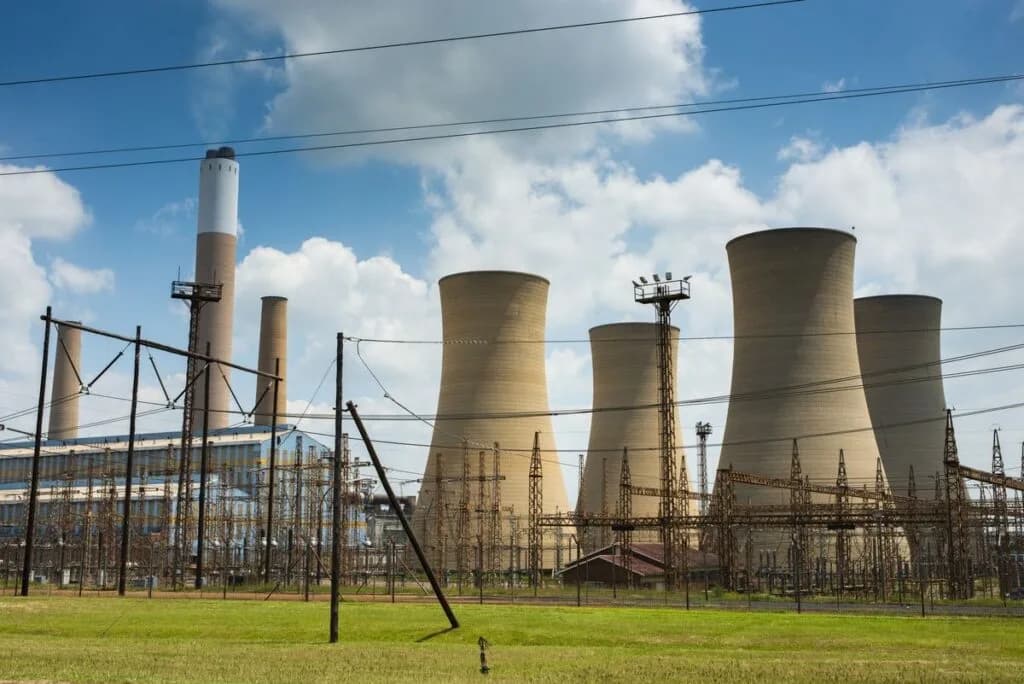
Main Image: Bloomberg.com