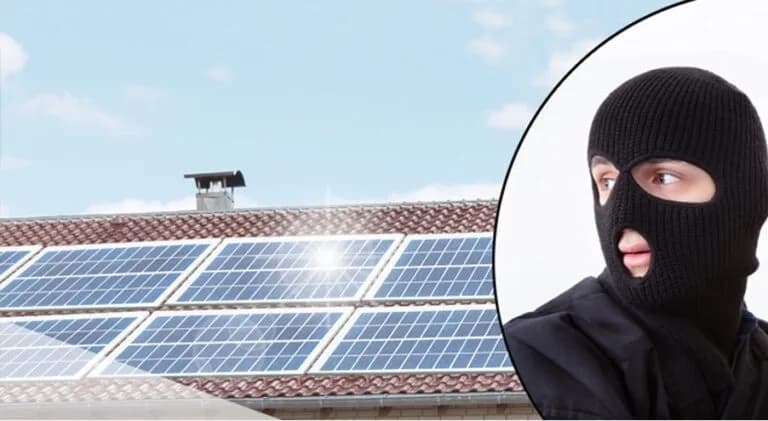
The Escalating Trend of Solar Panel Theft: Criminals Seizing New Opportunities
South Africa has imported an astounding R31 billion in solar panels over the last decade, transforming the country into a thriving market for criminal activity. Criminals have discovered a new way to profit from the situation as demand for solar panels skyrockets due to persistent load shedding. Theft of solar panels has become a major
The-Escalating-Trend-of-Solar-Panel-Theft-Criminals-Seizing-New-Opportunities
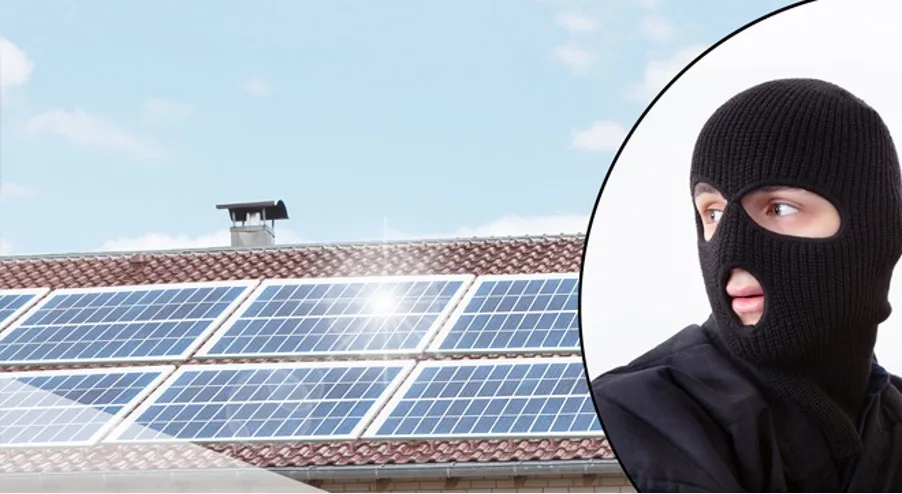
South Africa has imported an astounding R31 billion in solar panels over the last decade, transforming the country into a thriving market for criminal activity. Criminals have discovered a new way to profit from the situation as demand for solar panels skyrockets due to persistent load shedding. Theft of solar panels has become a major concern for homeowners, businesses, and insurers alike.
Despite the lack of official statistics, experts and industry professionals unanimously agree that solar panel theft is on the rise. During a recent interview with Cape Talk radio, Rodney Taylor, the managing director of home automation company Guardian Eye, mentioned this growing concern. He noted that load shedding has increased demand for solar panels, resulting in a lucrative black market. Criminals are dismantling stolen panels to extract valuable components such as copper or selling them as complete units.
Wynand van Vuuren, client experience partner at King Price, agrees that this trend is likely to continue. The significant import volume of solar panels from 2010 to 2022, according to Gaylor Montmasson-Clair, facilitator of the South African Renewable Energy Masterplan and assistant programme manager for sustainable growth at Trade & Industrial Policy Strategies, has contributed to the burgeoning criminal market.
Solar panel theft is not limited to South Africa; it is a worldwide problem. According to reports, solar panel-related crimes increased by 93% in the United Kingdom between 2021 and 2022. According to Viamon, a German solar security company, more than 5,000 major solar panel thefts occur in Europe each year, with over 400 cases reported in Germany alone.
Insurers are currently grappling with the consequences of this growing trend. While many insurers were hesitant to share specific figures, most admitted to seeing an increase in claims related to solar panel theft. In response, Dialdirect CEO Anneli Retief revealed that the insurer recently launched a combo deal specifically designed to protect South Africans from power surge-related damage and solar system theft.
Insurance companies are offering coverage options for solar panels and inverters under the “buildings” or “home contents” categories, depending on ownership status, to combat solar panel theft. Youlon Naidoo, MiWay’s executive head of claims and procurement, recommends that clients install security bolts on their panels and use alarms that can be linked to the panels for immediate alerts if any tampering is detected. Many solar panels also have unique serial numbers, allowing for the tracking and recovery of stolen panels.
According to Marius Steyn, personal lines underwriting manager at Santam, it is critical to upgrade insurance coverage when installing solar assets to avoid being underinsured in the event of a claim. When a solar power system is installed, the value of the building rises, necessitating an adjustment in the building sum insured to account for the solar power system investment. Failure to do so may result in underinsurance and partial payment of claims.
Choosing a reputable installer is critical to ensuring the effectiveness of solar panels and avoiding potential problems. Steyn advises checking the installer’s credentials, previous work references, and the duration of their operation. A reputable installer should provide a detailed quote that includes the scope of work, the components used, as well as after-sales services, warranties, and guarantees. Before proceeding with the installation, pre-installation inspections are required to assess the building’s roof structure and rafters to ensure they are not compromised, rotten, or damaged.
Furthermore, obtaining a certificate of compliance upon installation of a solar power system is required by law and is required for registration with the relevant municipality. This certificate is automatically provided by reputable installers.
Ernest North, co-founder of the fully digital insurance platform Naked, admits that the platform has not yet seen a significant increase in stolen panel claims. However, given the high value of solar panels, as well as the current energy crisis, rising power costs, and growing second-hand market, panel theft is expected to increase further. North warns consumers to be cautious when purchasing used panels at low prices and insists on seeing the original proof of purchase, which includes warranty information.