Recent study reveals more businesses are dumping Eskom, and opting for private energy
The latest research conducted by Sakeliga revealed that more and more businesses are dumping the state-owned power generator, Eskom, for alternative power sources. A daily publication says the study shows that businesses are fast becoming less dependent on the power supplier, as many pointed fingers at the rolling blackouts. Executive director of research and strategy at Sakeliga,
Recent study reveals more businesses are dumping Eskom, and opting for private energy
The latest research conducted by Sakeliga revealed that more and more businesses are dumping the state-owned power generator, Eskom, for alternative power sources.
A daily publication says the study shows that businesses are fast becoming less dependent on the power supplier, as many pointed fingers at the rolling blackouts.
Executive director of research and strategy at Sakeliga, Russell Lamberti, explained that load-shedding has cost local businesses greatly.
The company executive further explained that localentrepreneurs are now vying for the privatisation of electricity generation anddistribution.
“Complete dependence on Eskom has diminished substantially over the last three years, with acute dependence falling from 60% to 35% of those surveyed. However, most businesses remain dependent on Eskom to a significant degree,”said Lamberti.
“Less than one in five businesses surveyed consider themselves completely independent of Eskom’s power supply, and this has not changed in the last three years.
“Business owners are clearly demanding the ability to buy energy from alternative producers and distribution networks that can affordably meet their industrial-scale needs. Therefore, over 90% of those surveyed fully agree that South Africa’s energy market must be completely open to private power production and distribution.
“These results strongly underscore our view that full energy market liberalisation is an urgent imperative.”
SowetanLIVE reported that the research company conducted it survey on more than 478 businesses to determine the cost of the rolling blackouts on its member businesses.
It is mentioned that 64% of the businesses or respondents were small businesses with only 10 or fewer employees.
“The survey, which was conducted during the peak of load-shedding in June, hasfound that businesses are now spending more on alternative power sources to alleviate power shortages,” reports the daily website.
“The survey further revealed that the direct costs of the severe load-shedding amount to a substantial 5% turnover for the median business that has a monthly revenue of about R300 000 while reporting a loss of R8 000 a month from April to July.”
Lamberti also said that an increase in power shortages in June has had a negative impact on economic growth and business health, stating that the scarcity poses a threat to Sakeliga’s member businesses.
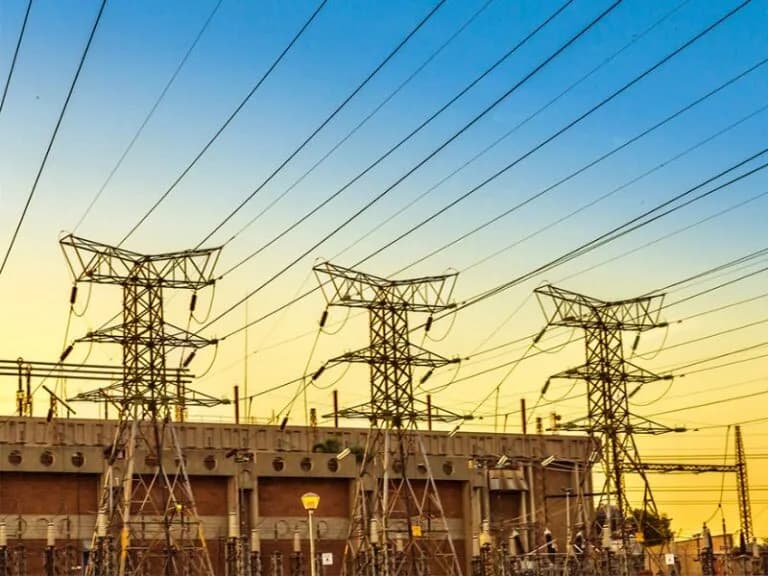
Main Image: Eskom Power Station/Investec