Kia Sportage Diesel (2023) Review: A Powerful and Efficient Option
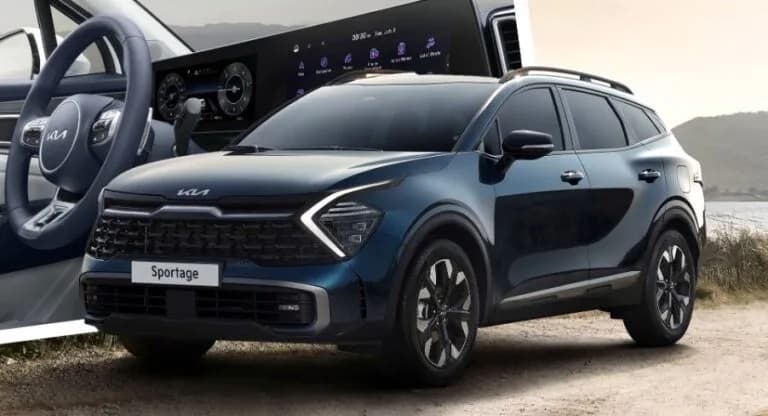
Kia has delivered on its promise to add turbodiesel engines to its Sportage lineup. We were able to spend several weeks behind the wheel of the 1.6CRDi GT Line Plus to determine its true capabilities and whether it outperformed its petrol counterparts. Let us dig deeper into our findings to see if this diesel variant
Kia-Sportage-Diesel-2023-Review-A-Powerful-and-Efficient-Option
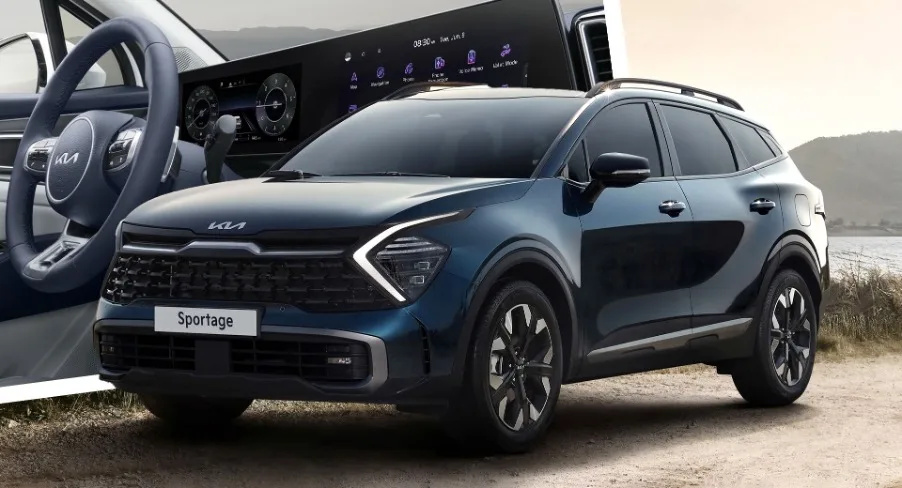
Kia has delivered on its promise to add turbodiesel engines to its Sportage lineup. We were able to spend several weeks behind the wheel of the 1.6CRDi GT Line Plus to determine its true capabilities and whether it outperformed its petrol counterparts. Let us dig deeper into our findings to see if this diesel variant is worth considering.
When the current generation (NQ5-gen) Sportage first arrived in the local market in September 2022, it was only available with petrol engines. However, Kia South Africa hinted at the possibility of future turbodiesel options. In May, three 1.6CRDi Sportage models were added to the lineup, as expected.
The Sportage 1.6CRDi is powered by an older 1.6-litre 4-cylinder turbodiesel engine. Although it may appear dated, we applaud Kia’s decision to incorporate a technology that has proven to perform well in South African conditions. Notably, this engine is based on the one found in the Kia Soul diesel, which adds to its dependability and performance.
Unfortunately, turbodiesel engines are becoming less common in passenger cars, with many manufacturers discontinuing them. They do, however, continue to play an important role in large SUVs and commercial vehicle-based models. Hyundai offers two 2.0D Tucsons in the medium SUV segment, while Volkswagen and Mazda offer all-wheel-drive turbodiesel Tiguans and CX-5s, respectively.
With the addition of the turbodiesel variants, the Sportage lineup now includes eight models (five 1.6-litre turbo petrol and three 1.6-litre turbodiesels) across three trim levels, making it one of the most diverse in its class.
The 1.6CRDi GT Line Plus is slightly less powerful than its turbo-petrol siblings, with peak outputs of 100 kW and 320 Nm. It makes up for this with higher torque output and, as expected, superior fuel economy.
Let us take a look at the numbers. The 1.6CRDi GT Line Plus accelerated from 0 to 100 kph in 10.37 seconds, which was slightly faster than the claimed 11.4 seconds. Its fuel consumption rate was 6.6 L/100 km. Although this figure exceeded the claimed 4.9 L/100 km, it is important to note that we drove the Kia aggressively and encountered heavy traffic, which impacted overall efficiency.
If your daily commute consists primarily of motorway traffic and you drive conservatively whenever possible, achieving fuel consumption of less than 6 L/100 km is entirely feasible. The Sportage’s 54-litre fuel tank allows you to travel approximately 1,000 kilometres between fill-ups.
When comparing the 1.6CRDi GT Line Plus to the 1.6T-GDi GT Line S, a turbo petrol variant we reviewed last year, Kia claims a 0-100 kph time of 8.8 seconds and an average consumption of 6.5 L/100 km for the latter. While we did not run a timed performance test on the 1.6T-GDi GT Line S, it did consume 9.2 L/100 km during our testing. As a result, if quick off-the-line acceleration is important to you, the petrol option is preferable. However, if long-term fuel efficiency is important, the diesel variant is the way to go.
One might wonder if the older diesel engine emits the typical diesel clatter. While it is audible from outside the vehicle, particularly during a cold start, Kia has done an excellent job of isolating the cabin from such noise. The interior of the Sportage is impressively refined, effectively reducing road, wind, and mechanical noise.
The moderate outputs and 0-100 kph time of the 1.6CRDi GT Line Plus do not detract from the overall driving experience. The vehicle never felt underpowered during our time with it. Peak torque is available between 2,000 and 2,250 rpm, allowing for smooth and effortless overtaking without the need to depress the accelerator pedal completely. Surprisingly, a model weighing just under 1.5 tonnes achieves this level of performance.
The powertrain’s secret weapon is the 7-speed dual-clutch automatic gearbox, which works in tandem with the engine to provide quick and smooth gearshifts. Although there are shift paddles on the steering wheel for manual gear changes, the automatic transmission’s shift mapping is so well-calibrated that we rarely needed to use them. The Sportage has three drive modes, and we spent the majority of our time in Smart mode, which combines the best of Eco and Sport.
The Kia Sportage continues to impress with its excellent driving experience, plentiful luxury features, and high interior build quality. It is an undeniably remarkable product, and some of our testers consider it to be the best model in the medium SUV segment.
Given the ongoing rise in new-car prices, many buyers are looking for more affordable options, resulting in strong demand for medium SUVs from brands like Mazda, Haval, Hyundai, Volkswagen, and Toyota. The question of whether to get the petrol or diesel Sportage remains. To be clear, you cannot go wrong with either option. However, it is critical to choose the variant that best meets your specific requirements. If you frequently travel long distances, such as a daily commute from Pretoria to Sandton, the turbodiesel Sportage is a better option.
While the 1.6CRDi GT Line Plus is an excellent choice, better value can be found lower in the lineup. The 1.6CRDi EX costs R84,000 less and lacks additional safety technology, 19-inch wheels, shift paddles, and a panoramic sunroof, among other features. Keep this in mind as you make your decision.
Finally, the Kia Sportage Diesel 1.6CRDi GT Line Plus is impressive in terms of power, efficiency, and overall driving experience. Whether you opt for the diesel or petrol engine, you can expect a high-quality SUV that provides excellent value for money.