Cell C owes R31 million to the landlord
According to Attacq's findings for the six-month period ending 31 December 2022, R31.1 million of Cell C's overdue rent would not be collected. Cell C rents its facility from Attacq, a real estate investment company (REIT), and has been having financial difficulty in paying its rent. The Cell C facility had three structures: a walk-in
Cell C owes R31 million to the landlord
According to Attacq’s findings for the six-month period ending 31 December 2022, R31.1 million of Cell C’s overdue rent would not be collected.
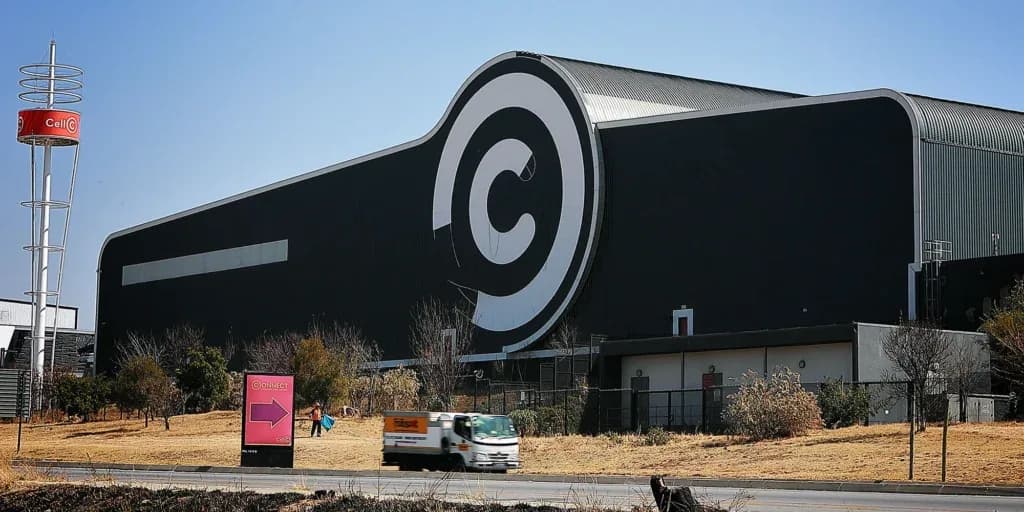
Cell C rents its facility from Attacq, a real estate investment company (REIT), and has been having financial difficulty in paying its rent.
The Cell C facility had three structures: a walk-in centre (4921 square metres), a cooperation hub (24,955 square metres), and a warehouse (41,014 square metres).
In light of Cell C’s debt recapitalization, Attacq and Cell C modified their leasing agreement in 2022.
Cell C will only continue to rent the cooperation hub under the extended leasing arrangement. The walk-in centre and warehouse will be occupied by new tenants.
According to Attacq, it has entered into a contractual arrangement with Cell C to recover unpaid rent. The contract is worth R64 million.
The funds would be distributed to Attacq in two installments, due in 2024 and 2026. The overdue rent would also be subject to 6% interest.
The payment in 2024 is for all unpaid rent from Cell C prior to its recapitalization. The payment in 2026 is for all outstanding rent after recapitalization.
Attacq also stated that it had received a cash payment from Cell C for unpaid rent that was not included in the R64 million.
Nevertheless, Attacq does not anticipate to collect the entire R64 million because its projected credit loss from Cell C has been increased to R31.1 million.
Trade receivables that are not expected to be collected constitute an expected credit loss.
It should be emphasised that the R31.1 million was not written off by Attacq. It signifies that it will continue to try to recover it, but it is included as a provision in the financial statements due to the low likelihood of recovery.
Attacq’s issues with Cell C come from the mobile operator’s recent financial challenges.
Cell C went into debt default and was forced to lay off employees and cease paying numerous suppliers, including its landlord.
Cell C completed a recapitalisation procedure to considerably reduce its R7.3 billion debt burden in order to solve its dire financial situation.
It accomplished this by providing its creditors 20c for every rand owed by Cell C, reducing its debt load to R1.46 billion.
Blue Label Telecoms, Cell C’s largest shareholder, contributed R1.46 billion, increasing its stake to 49.3% following the recapitalisation.