Bold New Mitsubishi Triton Bakkie Revealed!
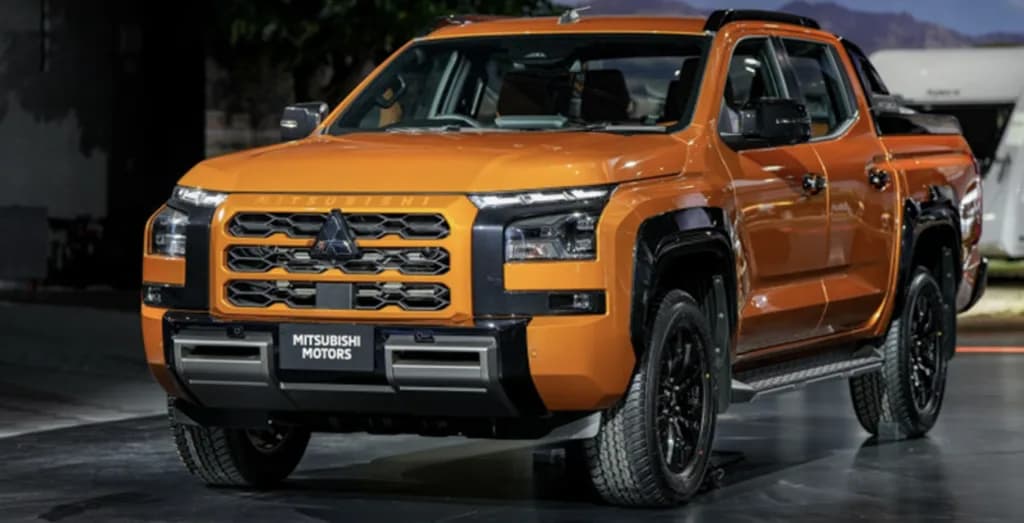
The all-new Mitsubishi Triton, is a bakkie with a muscular body and increased power over its predecessor. Let us take a closer look at the striking design and impressive features of this latest-generation bakkie, which aims to compete with formidable rivals like the Toyota Hilux, Ford Ranger, and Isuzu D-Max. The long-awaited reveal took place
Bold New Mitsubishi Triton Bakkie Revealed!
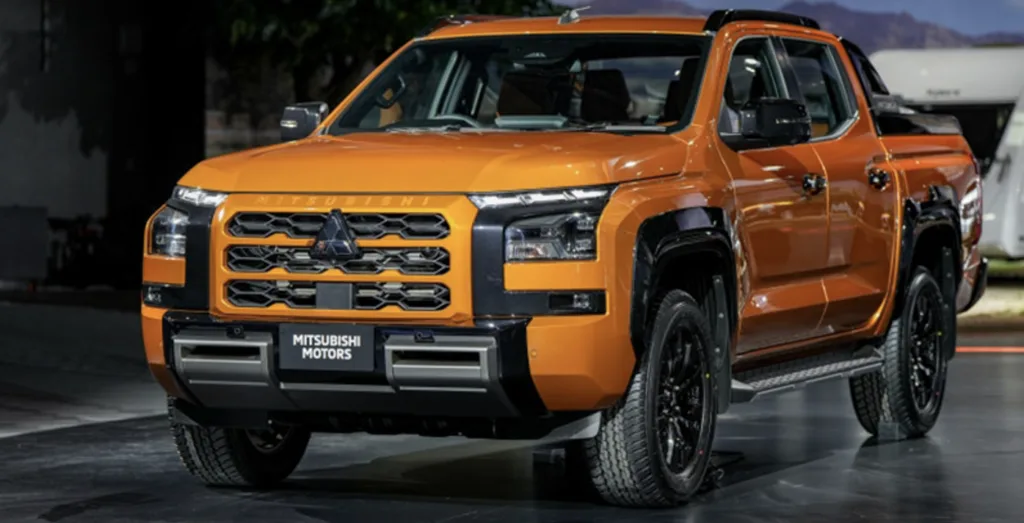
The all-new Mitsubishi Triton, is a bakkie with a muscular body and increased power over its predecessor. Let us take a closer look at the striking design and impressive features of this latest-generation bakkie, which aims to compete with formidable rivals like the Toyota Hilux, Ford Ranger, and Isuzu D-Max.
The long-awaited reveal took place in Thailand, and the 6th-generation Triton, also known as the L200 in some markets, is set to arrive in South Africa in 2024. Mitsubishi proudly presents this vehicle as a “global strategic vehicle,” and the next-generation Nissan Navara is expected to share some similarities with this model, given that the two brands are part of the Renault-Nissan-Mitsubishi Alliance.
Every aspect of the Triton has been thoroughly reimagined, according to the Japanese automaker, from the interior and exterior design to the chassis, ladder frame, and powertrain. The new bakkie is 5,320 mm long (15 mm longer) and 1,865 mm wide (50 mm wider), with a 130 mm stretched wheelbase, now measuring 3,130 mm. The load-bay length has been increased by 35 mm over the previous model, reaching 1,555 mm, and top-spec models now have a braked towing capacity of 3,500 kg (an increase of 400 kg).
Notably, the new Triton has a “bigger body size” than its predecessor. It is built on a newly developed ladder-frame platform and powered by an engine that promises higher output and improved environmental performance.
The new Triton, which is available in three traditional body styles (double cab, club cab, and single cab), has a ladder-frame chassis with a 65% larger cross-sectional area than the previous model. This improvement results in 40% more bending rigidity and 60% more torsional rigidity.
Let us talk about the powertrain options. While the previous Triton used a 2.4-litre, 4-cylinder turbodiesel engine that produced 133 kW and 430 Nm, the new model uses a newly developed “4N16” engine with the same displacement. It will be available in three configurations: a high-output version with twin turbochargers producing 150 kW and 470 Nm (with 470 Nm available as early as 1,500 r/min), a 135 kW/430 Nm configuration, and a 110 kW/330 Nm tune.
The 6-speed automatic gearbox with “sport” mode from the previous model has been carried over. In addition, a 6-speed manual cog-swapper with shift-by-wire will be available.
The new Triton retains Mitsubishi’s “Super Select 4WD-II” and “Easy Select 4WD” systems, as well as a centre torque-sensing limited-slip differential that can distribute driving force in a 40:60 front-to-rear ratio. Drivers can select between 2H, 4H, 4HLc, or 4LLc modes, for a total of seven drive modes.
The new Triton features Mitsubishi’s latest interpretation of the “Dynamic Shield” design philosophy, highlighted by daytime running lights with three L-shaped LED elements that resemble a hawk’s sharp gaze. The rear features T-shaped taillights and a rear spoiler to improve aerodynamics. The door handles have been enlarged for a better grip, and the side steps have better water drainage.
The grille on higher trim levels is body-colored, while the side mirror caps, front-end garnish, exterior door handles, and front bumper are all black. The undersides of the front and rear bumpers are a dark titanium colour, and the styling bar, roof rails, overfenders, and cargo bed are all black.
The new Triton’s cabin is filled with geometric shapes and metallic elements. The centre console includes a cup holder for two large cups as well as a console box that can hold four 600 ml plastic bottles. The instrument panel and centre console also have USB A and C charging sockets, as well as a wireless charger at the bottom of the instrument panel. The infotainment screen is a generous 9.0 inches in diameter.
Mitsubishi redesigned the front seats to reduce driver fatigue and raised the hip point 20 mm for better visibility. The A-pillar design has also become more vertical, resulting in wider door openings and easier ingress and egress.
Mitsubishi has made some improvements for the mechanically inclined, such as changing the engine’s drain bolt location to allow oil replacement without removing the underbody cover. The service hole size has also been increased to allow garage jacks to be used without an attachment.
“As a pick-up truck for a new era, we have developed the all-new Triton with even more Mitsubishi Motors-ness,” says Takao Kato, President and CEO of Mitsubishi Motors. He emphasises that Mitsubishi Motors developed the key features of the all-new Triton, including a robust ladder frame and body, tough chassis, powerful and driver-friendly engine, and 4WD system that achieves excellent road handling and stability. The all-new Triton is a pivotal model for Mitsubishi Motors, ushering in a new era of growth as the company’s first global strategic vehicle.
The outgoing Triton was underappreciated by bakkie buyers in South Africa, with only 380 units (an average of around 63 units per month) sold locally in the first half of 2023. As the new Triton arrives in South Africa, it will be interesting to see how it performs and whether it can become one of the country’s best-selling bakkies.