
Africa's Top 10 Fastest Growing Industries
Africa is the second-largest continent by area and population, with one of the world's shortest coasts. In terms of development and financial potential, though, there is no shortage of beached whales all around. Most African governments are integrating structural adjustment initiatives with historically successful companies in order to maximise production and raise employment rates. Several
Africa's Top 10 Fastest Growing Industries
Africa is the second-largest continent by area and population, with one of the world’s shortest coasts. In terms of development and financial potential, though, there is no shortage of beached whales all around. Most African governments are integrating structural adjustment initiatives with historically successful companies in order to maximise production and raise employment rates. Several sectors have managed to outperform their estimates in this approach. These top ten African sectors are driving the continent’s development goals by delivering on key promises of production, productivity, innovation, and employment. Let us delve into the fastest-growing industries in Africa that are becoming the focus of attention.
Fishing Industry
Africans began commercial fishing as early as 1500, made possible by the extensive fish variety found on the coast of East and West Africa. Today, Africa contributes 8.1% to world fishery production, a surge from 5.9% in 1950. Some of the reasons to explain this increase are:
• Expansion of Exclusive economic zones (EEZs) to 200 miles,
• Technological advancements in the marine sector, brought in by higher investment and progressive policies,
• Unprecedented focus on food security by the world,
• Rising cases of undernourishment,
• Interest from developing countries to harness the fishing capacity of African waters.
According to the World Bank, fishing provides 24% of Africa’s GDP(1). It also employs 12 million people, 59% of them are women working in processing and fishing. The industry originated as a means of sustenance in Africa and subsequently grew into a highly competitive one. Because of shifting food trends throughout the world, fishing revenues are tremendous.
According to a critical analysis, “opaque fishing practises” are one of the major reasons Africa is lagging behind in its blue revolution.
(2) Although being connected to the sea, two-thirds of African countries are missing out on this transformation. Illicit and opaque trading methods, uncontrolled catches, and unreported fishing operations are among the reasons. Going forward, Africa’s focus is on building better surveillance technologies to dissuade those who are depleting the water resource of its wealth.
Textile Industry
The textile industry in Africa has been active since pre-colonial times. While some regions advanced with a relatively greater number of industries, others competed on a small scale with small industries that grew like mushrooms. These industries were given an upper hand by low-wage daily workers who were available in plenty, thanks to the ever-growing population of the continent. The wealth of these industries can be pictured in the words of Heinrich Barth who was a popular German African traveler. According to Barth, the textile occupation was largely carried out post-harvest period, ensuring unparallel quality and skillset. The items were then sold in markets that stretched from present-day Senegal to Chad along with European nations.
Following independence, Africa saw two distinct eras of textile growth:
| PHASE 1: Import substitution (Late 1950s-1980s) | PHASE 2: Promotion of exports through Export Processing Zones (since the 1990s) |
| Phase 1 included measures like import quantity restrictions, customs duties, surcharges, and a complete ban on certain items. Since the World Trade Organization (WTO) was not yet formed, the policies were easy to implement, so much so, that the 1960s and 1970s came to be referred to as the ‘developmental decades.’ Phase 1 ended with the two oil price shocks and structural adjustments. | Phase 2 began with several sub-Saharan African countries developing export processing zones for export exclusive production. Domestic consumers and investors were not brought inside the purview of these EPZs. Rather, incentives were provided to foreign investors to increase FDI in the sector. |
Africa has been working on furthering its textile innovation in recent years. South Africa, for example, has grown into technical textiles by manufacturing hemp goods used in aeronautics. Due to the availability of large-scale workforce and the production environment, H&M recently launched textile factories on the continent.
Africa now supplies about 10% of the world’s cotton demand. The establishment of Togo’s Plateforme Industrielle d’Adetikopé aided the localization of the textile value chain. The initiative aims to turn more than 50,000 tonnes of cotton fibre into ready-to-wear clothes worth more than $70 million. (3) Benin’s Cotonou and Gabon’s Nkok are both developing similar economic zones. The projects are aimed at embedding self-reliance into the very core of the textile industry, enhancing its global reputation.
Mining Industry
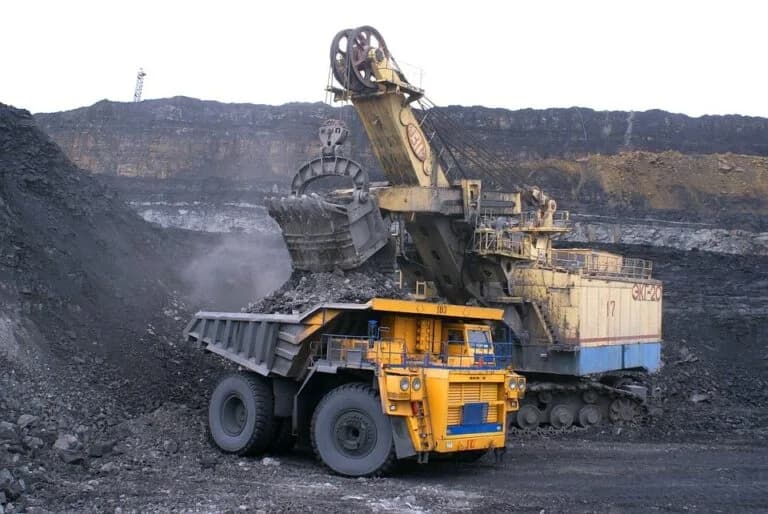
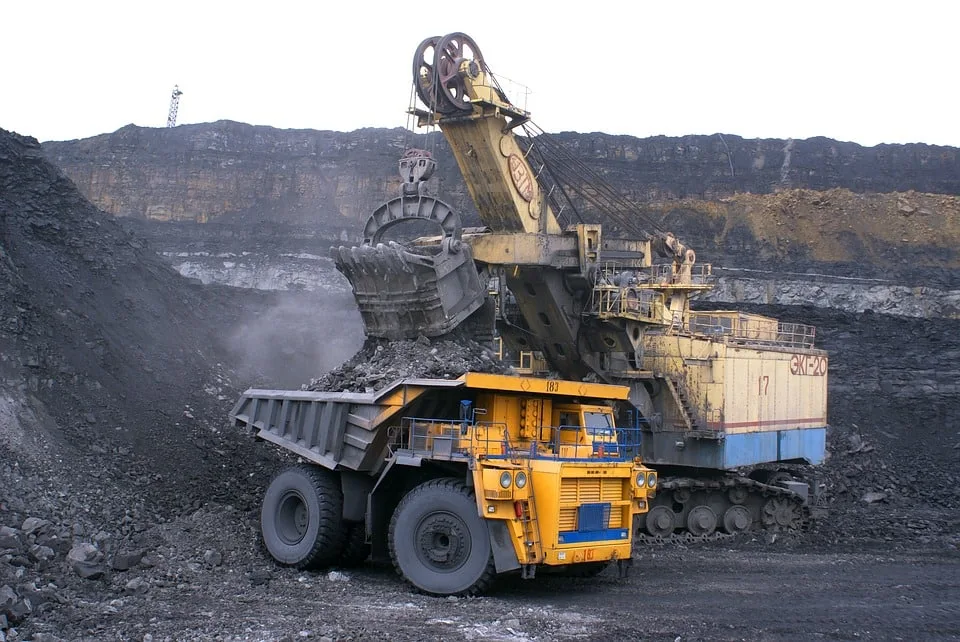
Africa was most likely the first continent to initiate the method of extracting iron ore for painting on rock surfaces. The earliest mine to be extracted was the Ingwenya mine in Swaziland (Southern Africa) 20,000 years ago. Subsequently, the mines aided world trade, which was headed by European countries. Because of the necessity for industrialisation, numerous countries adopted 100% nationalisation of the industry following independence. Nevertheless, the stakes were later decreased in order to promote equitable growth and bring in the private sector for greater financial rewards.
Africa is a key producer of some of the world’s most valuable minerals and metals. The economy stinks of reserves in every region, from precious metals like gold and platinum to production-oriented commodities like iron and nickel. DR Congo is the world’s third largest diamond producer, whereas Rwanda and DR Congo are the world’s major Tantalum producers. The sector is appealing to foreign direct investment from a variety of nations throughout the world. Going forward, a good state perspective might be observed in the form of industrial aid. For example, both Ugandan and Tanzanian mining policies require the industry to contribute to national GDP. There is also growing public sentiment to participate in the growth of the mining industry.
The African Minerals Development Center was established as a result of the African Mining Vision (a cooperative initiative by African states to boost mining-related growth). The centre provides strategic support to the plan’s goal, which was developed in partnership with the United Nations Economic Commission for Africa (UNECA) and the African Development Bank. The sector’s social and environmental effect is frequently scrutinised, but widespread use of protective gear, adherence to safety legislation, and standards and processes for dealing with problems on the job site are reaping reward for the business.
Infrastructure Industry
African countries have a strong desire for planned infrastructure projects, as seen by growing Investment and government spending. Since 2000, infrastructure spending has averaged roughly 3.5% per year, resulting in a massive supply-demand imbalance. According to the figures, investment in this sector has to expand by 1% in order to provide fair access to public services and real GDP development. Infrastructure spending has increased dramatically during the last 15 years. Nonetheless, more work has to be done in areas like as internet and electrical access, rail density, road density, mass transportation, and affordable housing.
According to a Mckinsey assessment, most infrastructure projects in Africa can be transformed into success stories by planning, negotiating offtake agreements, being open to risk management rather than being afraid of it, doing feasibility studies, and good coordination between different departments. (4) According to the analysis, the appropriate policies can attract about $550 billion in investment into the sector.
African countries have demonstrated unprecedented preparedness to shift into an infrastructure-strong continent in recent years. Government spending in the industry accounted for 42% of total investment in 2017. Between 2013 and 2017, the industry spent roughly $77 billion per year, which is more than double what the continent spent between 2000 and 2006. Infrastructure spending in Africa will only increase as the continent continues to expand. With an expanding population, the industry is expected to attract significant FDI from throughout the world.
Agriculture Industry
Agricultural in Africa was mostly done to feed the continent’s rising population. Over time, the industry evolved into a formidable force, with fresh ability for innovation, data analytics, and the application of artificial intelligence and machine learning for field tracking, among other things. Africa receives biannual rainfall, which promotes the formation of a varied range of natural plants. The industry generates employment for more than 60% of the population and contributes 23% of GDP.
Farmers in Africa often have tiny holdings rather than big acres, but because to the large area of neglected agricultural land, growth is simple. According to a Mckinsey research, the amount of unused agricultural land might be as high as 840 million hectares. (5) The research also discusses how large-scale sector investment may address both African food demand and global food security. Cocoa, cashew, tobacco, coffee, oranges, cotton, sesame seeds, black tea, cocoa paste, fresh grapes, and other key crops are farmed throughout the continent.
However, a major thrust is needed to ensure the export of higher valued and finished agricultural goods. African commodities that cross the border are often raw materials that are later processed to increase their worth. Small processing units struggle to get economical inputs for a long enough period of time to maintain themselves, eventually losing out to larger market participants. This is precisely the issue that Special Economic Zones (SEZs) are attempting to address in numerous parts of the continent, like Nkok and Togo. These integrated industrial zones, created in conjunction with Arise IIP and the African government, provide solutions that secure the maximum production value of each raw material.
Oil Industry
Africa is home to one-sixth of the world’s top oil-producing countries, accounting for around 9.6% of global output in 2019. Throughout the first decade of this century, oil contributed substantially more to global supplies. But, as prices stagnated, output followed suit. Between 2000 and 2011, the African oil sector saw exceptional increase in worker productivity and inflation—the former increasing while the latter decreased. Because of their vast oil reserves, countries such as Nigeria and Angola have been able to attract investment interest. Gabon, Tanzania, Uganda, and Mozambique are other popular destinations. Despite possessing significant oil reserves, Africa’s oil sector is unable to fully exploit its potential. Reasons include but are not limited to:
• Lack of pipeline infrastructure and refinery capacity to enhance oil production
• The huge distance between final consumers and processing sites
• Gaps in investment to build up investor sentiment
• Need for embracing digitalization to quickly acquire data for key decisions
• Risk planning
Many beneficial events have also occurred as a result of the sector’s outstanding success. Countries such as Ghana and Mozambique, for example, have just entered the competitive arena with startling output values. The recent finding of oil deposits and ongoing exploration, closeness to Asian nations, and investment in modern processing facilities, such as the Coral floating Liquified Natural Gas facility in Mozambique, are all key milestones.
Finance Industry
A strong financial sector promotes a country’s economic health. Throughout the 1980s and 1990s, Africa saw liberalisation, which was soon followed by many financial sector changes. Efforts have been taken to promote greater financial inclusion, a better business climate, the rapid adoption of regulatory frameworks, the revamping of the banking sector, and increased investment in market infrastructure. When combined with structural improvements, the industry displayed invincible figures that corresponded to the worldwide trend.
In terms of the insurance sector’s capacity to ride the Covid wave, the African financial industry has likewise demonstrated significant resilience and adaptability. Data show that 69% of insurance businesses and agents have developed resilient business strategies to help them stay successful in the long run. Beneficial developments can also be found in financial institutions’ long-term goals. More than half of financial institutions have proposed collaborating with successful and technologically advanced enterprises rather than competing with them. These institutions’ decision-makers are more open to independent directors on finance committees than ever before. Changes in the regulatory environment and more digitization throughout the continent have also increased risk appetite.
Transport sector
Africa’s march to full-fledged development is heavily reliant on its transportation industry. As Africa’s population grows, so does the tendency of urbanisation. As more people settle in major metropolitan regions, Africa’s transportation industry becomes even more appealing.
In Africa, logistics account for more than 70% of a product’s price, compared to less than 6% in the United States. So, decoding the logistics of the transportation sector is at the core of new startups and businesses. The growth of e-logistics across the continent has attracted investment from businesses such as Google, allowing the region’s large population and commercial commodities to be mobilised. Air routes, port networks, rail networks, and road networks have all been created across the continent. According to data, even with year-on-year growth in developing transportation routes, Africa currently has lopsided growth, e.g. majority of highway network in the continent is restricted to the Central zone.
Revenue has also decreased somewhat from last year, owing mostly to Covid-related constraints. According to the African Union, the continent’s port infrastructure requires upgrading to guarantee large-scale passenger and bulk freight operations. Africa’s maritime ports handle over 10% of global trade. According to the AfDB, the volume of goods passing through these ports has quadrupled in the recent decade. As a result, the transportation industry will see significant growth in the next years, with growth predicted to more than quadruple.
Healthcare sector
Throughout the last decade, Africa’s healthcare business has undergone dramatic upheaval. The African healthcare system is based on strong collaboration between the government, the corporate sector, non-profit donations, and community engagement. Significant investment may be made in hospital bed quality and quantity, improved pharmaceutical manufacturing machines for bulk manufacture, and competent human resources to help in complete patient care.
The African healthcare business is expected to be worth more than $250 billion by 2030. This amount creates a 14% gap in resource allocation. With an increasing population growth rate and changing food trends, the continent with a 25% disease load provides several issues to the world. Increasing incidence of both noncommunicable and communicable diseases present an opportunity for stronger collaboration among premier medical institutions to achieve inclusive growth that ensures that no one is excluded from basic healthcare.
Moreover, technology and innovation are being used to help patients in the region with medical operations. African healthcare is adopting solutions that promote fairness and healthcare access, from drones that transport drugs and reports in rural areas to solar-powered cribs for jaundice-affected kids. Governments in the area are likewise developing policy frameworks to provide all-weather safety nets for their residents.
Space Industry
The African space sector, like the rest of the globe, is government-driven, with commercial interest growing year after year. Space operations have encouraged the establishment of thousands of businesses, which are still deploying surplus spacecraft for commercial advantage. In terms of total market share, the African satellite TV market enjoys an advantage. Some 250 businesses have already begun to work on the democratisation of space activities. The sector’s present worth exceeds $19 billion and is predicted to exceed $22 billion by 2026. Geospatial technology is gaining traction, thanks to efforts from both the corporate and governmental sectors. Earth observation (EO) technology paves the way for customised distribution mechanisms and more accurate position maps. The data is highly sought after by newer businesses whose entire business model stands on the shoulder of EO data tracked from satellite activity.
The lengthy development time required for huge satellites becomes a roadblock. The integration of IoT and early warning systems can also improve the industry’s prospects for global recognition and participation in space missions. Investment may spark innovation, propelling growth and progress forward.
Conclusion
The atmosphere in Africa is changing; all-time high stability, political prowess, technical improvement, and expanding population have all given rise to potential real-time growth. Africa has invested in practically every expanding sector because of its ability to use existing resources without depleting them altogether. Stakeholders’ renewed interest is also driving additional investment into these areas.
Sources:
World Bank. “Africa Program for Fisheries.”
Oxford Business Group. “Which private players are investing in West Africa’s textiles industry?” 30 Sept 2021. Accessed 25 Aug 2022.
[4] Mckinsey & Company. “Solving Africa’s infrastructure paradox.” 6 March 2020. Accessed 25 Aug 2022.
[5] Mckinsey & Company. “Winning in Africa’s agricultural market.” 15 Feb 2019. Accessed 27 Aug 2022