
South Africa has passed new legislation to limit ministers perks and freebies
The Democratic Alliance has announced its intention to present a private members' bill (PMB) in parliament to limit the benefits and privileges given to cabinet ministers. The PMB notice was presented by DA MP Dr Leon Schreiber at the end of January, with comments on the bill accessible until 20 February 2023. The proposed bill
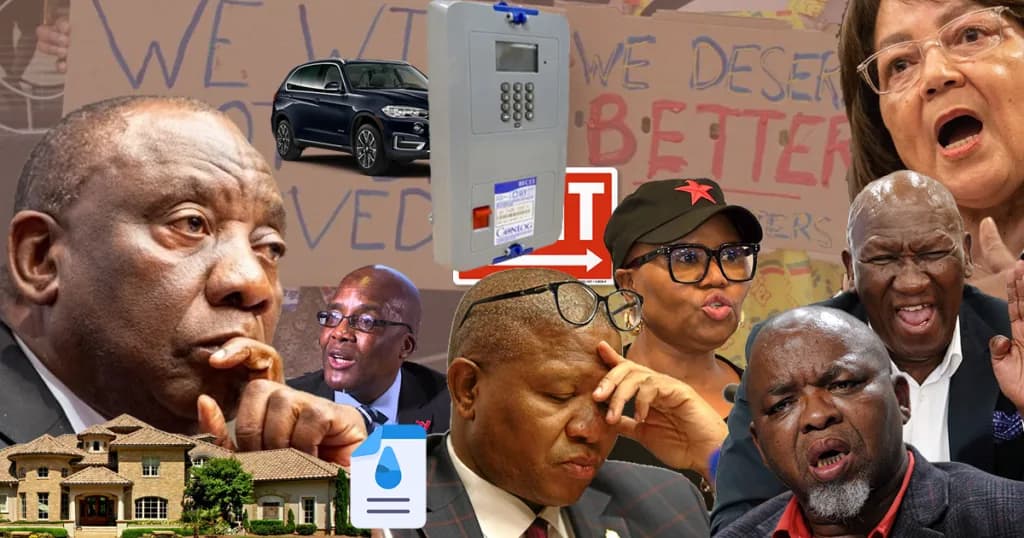
South Africa has passed new legislation to limit ministers perks and freebies
The Democratic Alliance has announced its intention to present a private members’ bill (PMB) in parliament to limit the benefits and privileges given to cabinet ministers.
The PMB notice was presented by DA MP Dr Leon Schreiber at the end of January, with comments on the bill accessible until 20 February 2023.
The proposed bill is in reaction to the tremendous uproar that erupted in 2022 when it was discovered that cabinet ministers will receive unrestricted free utilities at the cost of taxpayers – at a time when the country was plunged into constant blackouts owing to load shedding.
When president Cyril Ramaphosa unilaterally altered the regulations of the Guide for Members of the Executive – generally referred to as the ministerial handbook – in April 2022, he made various adjustments to cabinet benefits.
Following widespread anger, the president revoked the modifications in October and restored the provisions to their original state in the 2019 version of the guidebook. He also stated that the guidebook will be thoroughly examined.
Cabinet ministers have the following rights under the 2019 handbook:
- VIP protection services;
- Up to R700,000 for vehicles for official use;
- Coverage of travel costs for official purposes;
- The use of VIP services at airports during official trips;
- Security upgrades at official residences;
- Coverage of utilities at official residences;
- The employment of aides and other workers to assist on the job.
These benefits are in addition to the salary of ministers and deputy ministers, which range between R2 million and R2.4 million per year.
However, the DA claims that returning and rereading the guidebook is insufficient to remedy major faults in the benefits.
In response to inquiries about why the modifications were made and under what laws or rules they were permitted, Ramaphosa replied that the guidebook had no statutory foundation.
“The adoption of the guide is not done in terms of any legislative provision but is the result of a cabinet decision that the tools of the trade need to be defined and regulated,” Ramaphosa said at the time.
Simply said, the handbook exists because the government wants it to, and there are no rules or regulations regulating what advantages may be offered, how much money can be spent, or requiring a transparent procedure in establishing this.
According to the DA, this is the key issue that the new draught bill attempts to solve.
“Despite the President bowing to public pressure over the latest amendments to the guide, systemic problems with the guide remain. Principal among these is a lack of controls and transparency,” the party said.
“There is also no requirement for the National Assembly, or the president, to consider relevant factors, such as prevailing economic conditions in the country or the comparative costs of different tools of trade.
“Also, in contrast to other remuneration decisions, there is no legal requirement for the President to report changes to the guide to the National Assembly, nor is there any requirement to regularly review these allowances and benefits.”
The party intends to change the Remuneration of Public Office Bearers Act, 1998, through the proposed Remuneration of Public Office Bearers Amendment Bill, 2023, to make the handbook part of the law and bring it under the scrutiny of the National Assembly.
In general, the new legislation would:
- Provide for transparency and oversight where the President makes a decision about allowances, benefits, or tools of trade for the Deputy President, Ministers and Deputy Ministers;
- Provide for a review of all allowances, tools of trade and benefits of the President, Deputy President, Ministers and Deputy Ministers and regular reviews thereafter;
- Require the President to consider recommendations from the Independent Commission for the Remuneration of Public Office Bearers when providing allowances, tools of trade, and benefits; and
- Require the president to inform the National Assembly when making any changes to allowances, tools of trade and benefits.
Comments can be emailed to the Speaker of the National Assembly at speaker@parliament.gov.za and Dr Leon Schreiber at legislation@da.org.za by no later than Monday, 20 February 2023.