SA no longer has the world's highest unemployment rate, as factories drive job growth
South Africa's official unemployment rate fell to 32.9%, ranking third among 82 countries and the eurozone monitored by Bloomberg. South Africa's unemployment rate now trails Namibia and Nigeria, though some data is out of date. From the second quarter of 2021, it held the record. Still, according to the expanded definition, unemployment stood at 43.1%,
SA no longer has the world's highest unemployment rate, as factories drive job growth
South Africa’s official unemployment rate fell to 32.9%, ranking third among 82 countries and the eurozone monitored by Bloomberg.
South Africa’s unemployment rate now trails Namibia and Nigeria, though some data is out of date. From the second quarter of 2021, it held the record.
Still, according to the expanded definition, unemployment stood at 43.1%, which includes people who were available for work but were not looking for work, compared to 44.1% in the June quarter.
Despite record power outages, South Africa’s energy-intensive manufacturing sector was the biggest driver of job growth in the third quarter.
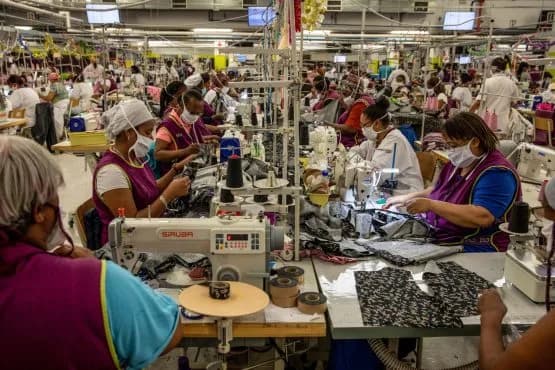
Manufacturing employment increased by 123 000 to 1.63 million in the three months to September, according to a report released Tuesday in Pretoria by Statistics South Africa. According to Desiree Manamela, acting chief director for labour statistics, formal sector manufacturers of basic metals, food, beverages, and tobacco products, and wood and wood products added the most jobs in the third quarter. Textile, clothing, and leather goods manufacturers in the informal sector also created jobs.
According to Bloomberg calculations, jobs in the sector increased even as Eskom imposed power outages on more than half of the days in the third quarter, resulting in a record 173 days of blackouts so far in 2022.
According to data released earlier this month, output from the manufacturing sector, which accounts for roughly 13% of GDP, was higher than expected in the third quarter. A factory sentiment index due Thursday will provide insight into the industry’s performance in the final three months of 2022.
For at least two decades, South Africa’s official unemployment rate has exceeded 20%. This is largely due to slow economic growth, as well as strict labour laws and bureaucratic barriers that have limited local businesses’ ability to hire additional workers. Analysts also point to a lack of adequate skills in the education system and apartheid-era spatial planning that makes it difficult for job seekers to enter and remain in the formal labour force. The unemployment rate for people aged 15 to 24, which includes school leavers and graduates from universities and training colleges, is 34.5%.
Unmet goal
The ruling ANC failed to meet its 2020 target of 14% unemployment. The target was part of the government’s 2012 National Development Plan, the fifth economic blueprint formally adopted since it took power nearly three decades ago. President Cyril Ramaphosa, who is expected to be re-elected as party leader for a second term, is expected to champion job creation initiatives next month.
Joblessness, rising food and fuel prices, and an aggressive interest-rate hike cycle all pose a threat to social stability in an economy on the verge of a recession and still reeling from several Covid-19 lockdowns and deadly riots in 2021. South Africa is one of the most unequal countries in the world, with 14 million people out of a population of 60 million suffering from food insecurity, according to a World Bank report released in April 2020.
During former President Jacob Zuma’s reign, government corruption, known locally as state capture, became rampant, jeopardising the state’s ability to create jobs and assist the vulnerable. Zuma, who resigned in 2018 under pressure from the ruling party, has denied any wrongdoing.
Unemployment will also complicate efforts to reduce fiscal deficits and debt, as the government considers expanding the welfare net in a country where nearly half of the population receives at least one social grant. According to the medium-term budget, South Africa will spend R243 billion, or nearly 4% of GDP, on welfare in the current fiscal year, with the majority of the money going toward child support and pensions.