
Rand weakens as the reality of greylisting comes in
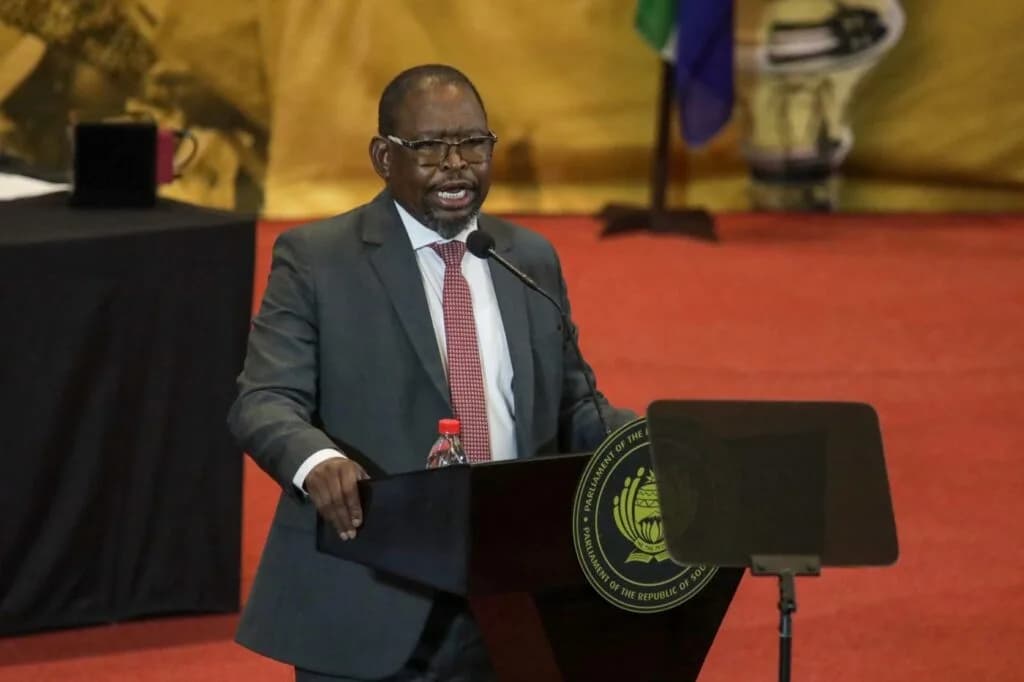
South Africa has given up the gains it achieved after Finance Minister Enoch Godongwana's budget address on Wednesday. Following the budget, in which the minister indicated that the government would assume more than half of Eskom's debt, the local unit launched a rally, trading higher on the news. The National Treasury suggested a total debt-relief
Rand weakens as the reality of greylisting comes in
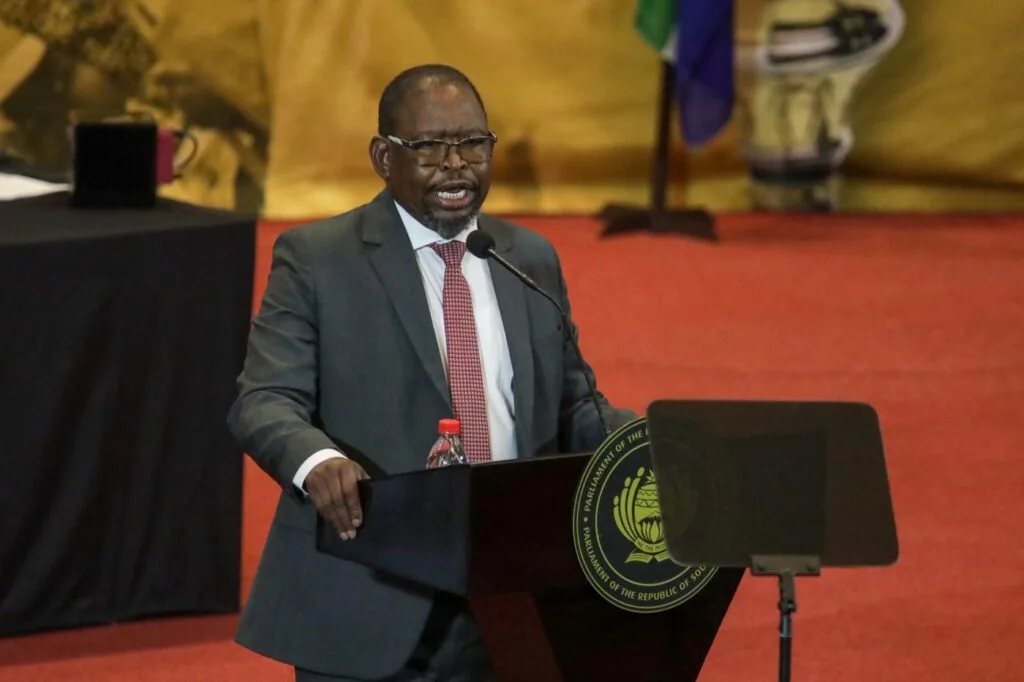
South Africa has given up the gains it achieved after Finance Minister Enoch Godongwana’s budget address on Wednesday.
Following the budget, in which the minister indicated that the government would assume more than half of Eskom’s debt, the local unit launched a rally, trading higher on the news.
The National Treasury suggested a total debt-relief agreement of R254 billion for Eskom, the key cause of the country’s sluggish economic development.
The relief will be granted in two sections, as announced in the budget: R184 billion will cover Eskom’s complete debt settlement obligation over the medium term, while R70 billion will be a direct takeover of Eskom’s loan portfolio in 2025/26.
Because of this debt reduction, Eskom will not need to borrow any more money during this time period.
The rand was trading at R18.17/$ at the time of the announcement, up around 0.42% from its previous close. It had touched R18.38/$ earlier in the day, its lowest since November, prior to the budget address.
But, by Thursday afternoon, these gains had been erased, with the rand falling to R18.34 to the dollar.
While markets applauded the long-awaited resolution to the utility’s debt, the reality of South Africa’s economic fundamentals, as well as the approaching greylisting by the Financial Action Task Force (FATF) on Friday, held things in check.
During his budget address, Gogongwana stated that the country should be prepared to be greylisted.
National Treasury stated in the budget itself “over the longer term, government has asked the FATF to formally reassess South Africa’s compliance during its June 2023 plenary”.
This advance notice for another assessment has led some investors to believe that greylisting is now likely, if not expected, by the government.
Annabell Bishop, chief economist at Investec, also stated that Eskom debt relief had a detrimental impact on the country’s debt ratio.
“Gross debt of the government is consequently now projected to stabilise at 73.6% of GDP in 2025/26. Previously the projection was estimated to peak at 71.1% in 2022/23,” said the economist.
South Africa’s currency remains vulnerable to domestic growth forecasts and a probable credit rating, she noted.
According to Bishop, the major credit rating agencies (Fitch, Moody’s, and S&P) already grade South Africa’s debt as containing all Eskom and other state-owned firm debt that the government guarantees, thus the impact should be credit neutral.
According to Bishop, prior to the national budget address, global ratings agency Fitch indicated that low growth potential at 1.2% remains a major credit concern, a further deterioration of trend growth or a shock that further weakens fiscal consolidation efforts might result in a negative rating action.
“There is some headroom at the sovereign’s rating of ‘BB-‘ to absorb a temporary impact on economic metrics from load-shedding, but a failure to address the problem over the medium term could add to downward pressure on the rating,” said Bishop.
She stated that there were some improvements in budgetary estimates in the budget.
The budget deficit for 2022/23 has been reduced to -4.2% of GDP, down from -4.9% of GDP previously.
By 2024/25, it is anticipated to fall to -3.2%.
“The downward revision of the National Treasury’s economic growth forecast for 2023 to 0.9% y/y from 1.4% y/y is in line with the consensus once a couple of outliers are removed. 2024 sees a slight drop to 1.5% y/y from 1.7% y/y.”
This has just a little impact on fiscal ratios, but the overall benefit is that a primary surplus happened earlier, in the current fiscal year, rather than in 2024/25, according to Bishop.
The South African rand is presently trading at:
- Dollar: R18.34/$
- Euro: R19.44/€
- Pound: R22.07/£