
No Free Lunch Podcast - With Greg Stewart and Brendon Thorpe
Podcast Overview
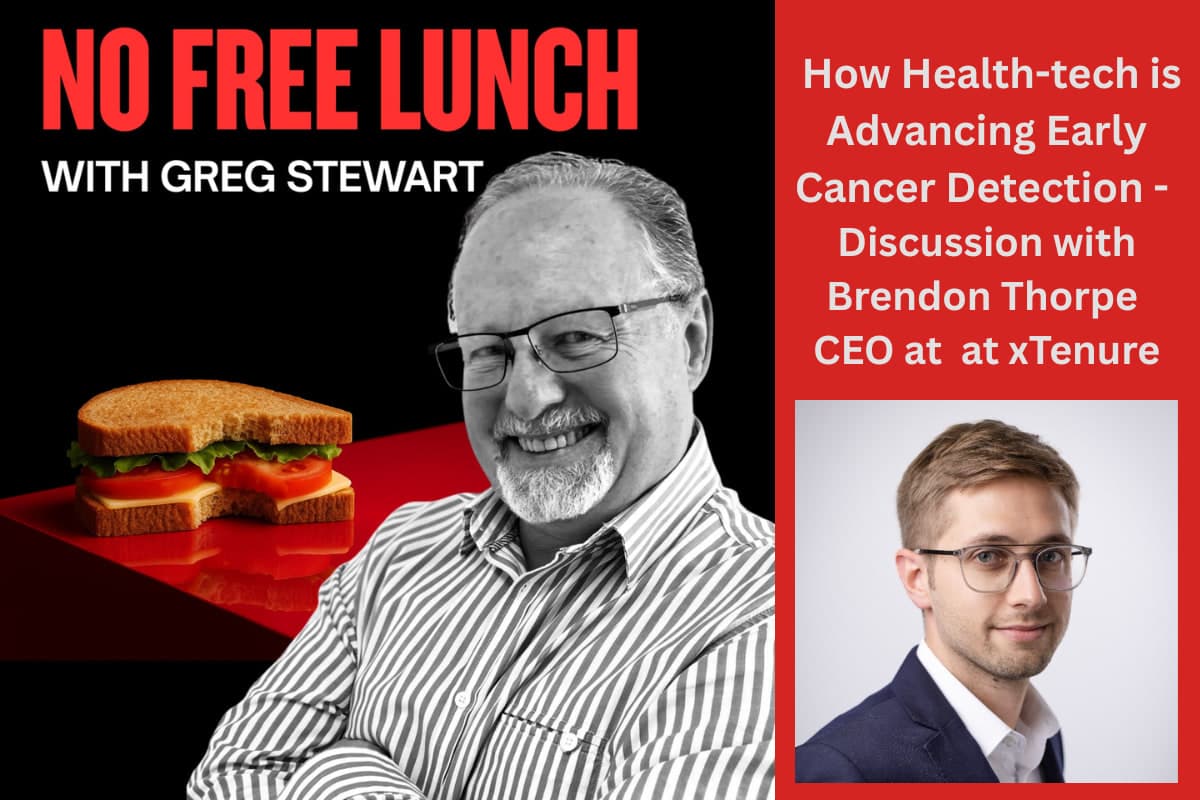
In this episode of No Free Lunch, Greg Stewart speaks with Brendon Thorpe, CEO and co-founder of X Tenure, about the fast-growing health tech sector and the role artificial intelligence can play in making cancer screening more accessible, more targeted, and more affordable.
The conversation centres on a key challenge in modern healthcare: how to identify the people most at risk early enough to intervene, without relying on expensive blanket screening for everyone.
Watch the Podcast here:
Brendon explains that X Tenure’s approach is built around a smarter risk-based model. Rather than screening all patients in the same way, the company uses health data, actuarial thinking, and AI to predict who is most likely to develop specific cancers and who should be escalated for further testing.
This is especially important in markets like South Africa, where cost, access, and data quality can make broad screening difficult to scale.A major theme throughout the discussion is the difference between traditional screening and personalized risk stratification. Brendon describes how the company combines medical history with a blood-based multi-cancer early detection test, allowing them to focus resources on the people who are most likely to benefit. He also highlights that the model considers timing, not just risk, because screening only makes sense if it can detect disease within a relevant window.
Highlights of the Discussion
- Why Brendon moved from actuarial science into health tech
He explains that risk management and population-level analysis from actuarial work translate naturally into cancer screening. - The problem with blanket screening
The episode explores how current systems often rely on simple age- and sex-based rules, which miss the more nuanced risk factors already available in health data. - How X Tenure uses AI and health data
The company aims to combine medical history, risk modeling, and blood test markers to make more personalized screening decisions. - Why early detection matters
The discussion stresses that many cancers are found too late, and that catching them earlier can dramatically improve survival outcomes. - Accuracy, sensitivity, and specificity
Greg and Brendon discuss the strengths and limitations of screening tests, including published performance ranges and the reality that no screening method is perfect. - South African rollout and local validation
Brendon outlines plans for local clinical trials and explains why South African data is important before scaling more widely. - Cost and accessibility
A key point is the potential to reduce costs by only escalating high-risk individuals to the more expensive blood test, rather than testing everyone. - Future growth and partnerships
The conversation ends with possibilities for working with corporates, medical aids, and healthcare partners to bring preventative screening into wider use.
The Podcast discussion presents a compelling case for using AI not as a replacement for medical care, but as a tool to make preventative healthcare smarter, more targeted, and more financially sustainable.