Nigeria’s startup scene looks beyond fintech and SMEs could benefit
For years, much of Nigeria’s startup story has been built around fintech, payments and mobile services. That is not the only place founders are building anymore.
Nigeria's Start Up
For years, much of Nigeria’s startup story has been built around fintech, payments and mobile services. That is not the only place founders are building anymore. Agriculture, education, healthcare and climate are attracting startups trying to solve problems that businesses deal with every day. Some are using software and other technology to tackle farm management, market access, education and the cost of running a business.
AI-generated summary. It can miss nuance — read the full story above for the complete picture.
For years, much of Nigeria’s startup story has been built around fintech, payments and mobile services. That is not the only place founders are building anymore. Agriculture, education, healthcare and climate are attracting startups trying to solve problems that businesses deal with every day. Some are using software and other technology to tackle farm management, market access, education and the cost of running a business.
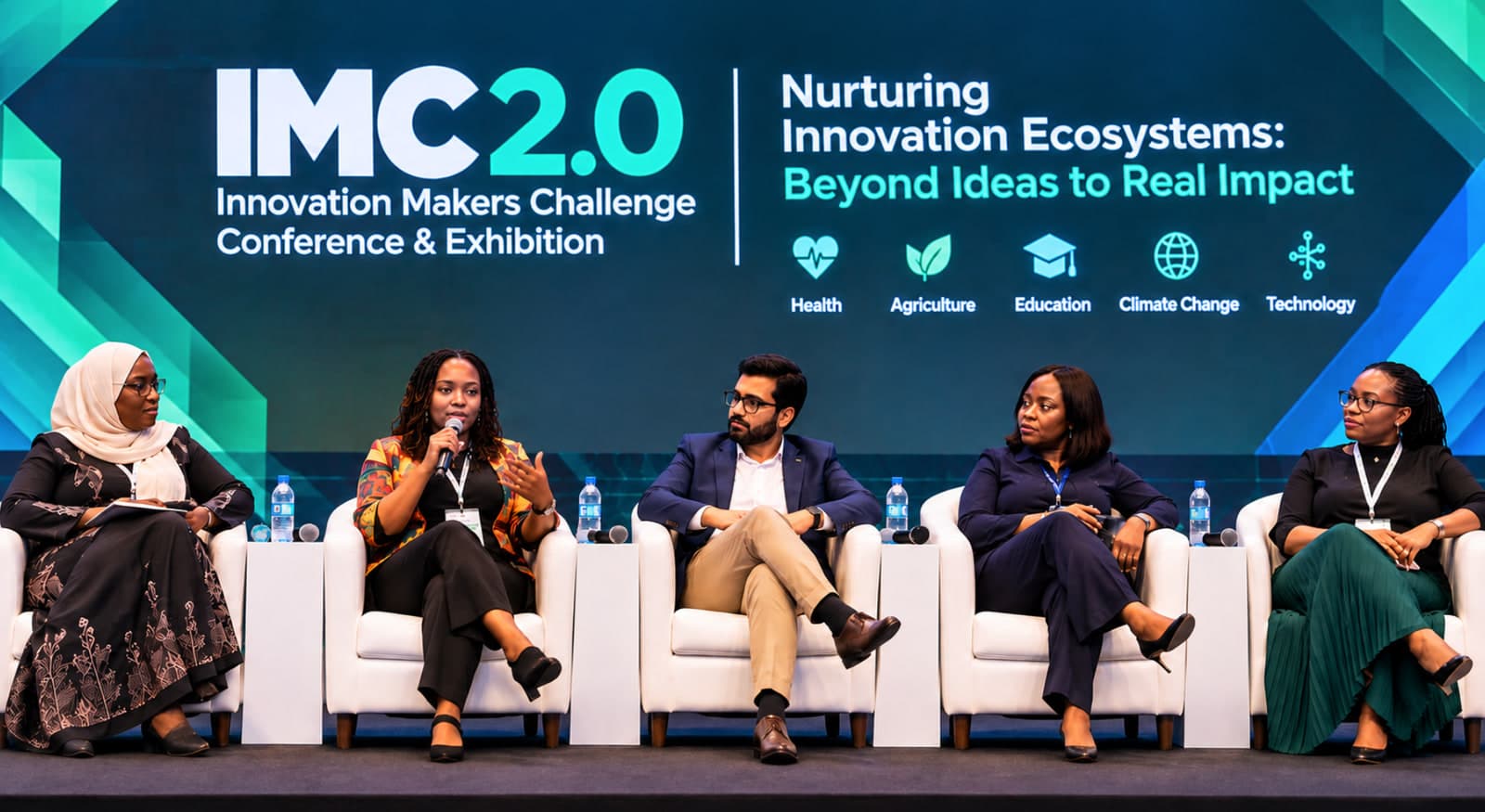
Five of these startups were put in front of investors and industry executives at the second Innovation Makers Challenge (IMC) Conference and Innovation Exhibition in Lagos on 24 September. The event, organised by the Telecommunication and Technology Sustainability Working Group (TTSWG), expanded this year's competition to health, agriculture, education, climate change and technology. The wider focus could have an impact beyond the startups themselves, particularly for small businesses that often cannot afford expensive technology or specialist services.
Three finalists are working in agriculture
“For SMEs, the real opportunity is not more technology. It is affordable technology that solves a problem they already have.”
Agriculture featured heavily among the five finalists. QiqiFarms works with farm produce offtake, while Elcornel Business Enterprises is developing climate-focused agricultural solutions. Anatsor Limited provides software for poultry farm management. Agrovesto is building an operating system for agriculture, with a focus on making farming more sustainable and easier to finance.
Blue Sands STEM Labs took a different route, developing virtual laboratory tools for STEM education. For small agricultural businesses, tools like these could eventually help with some of the everyday work that takes time away from running the business.
A poultry farmer, for example, could use farm management software to keep better records of production and costs instead of relying on notebooks or spreadsheets. For a small farmer or produce business, better links between producers and buyers could also reduce the amount of time spent looking for markets. The catch is that these products still have to be affordable and simple enough for smaller businesses to use.
Agrovesto wins N6 million
Agrovesto won the competition and received N6 million. Blue Sands STEM Labs received N2 million as first runner-up, while QiqiFarms received N1 million as second runner-up. The three companies shared N9.5 million in prize money. For a young company, that money can pay for product development, staff, equipment, customer acquisition or testing a new market. If the businesses use the funding to build products that SMEs can afford, the benefit could extend to companies that never attended the conference.
What this could mean for SMEs
Small businesses are often caught in the middle when new technology arrives. They need better tools, but they do not necessarily have the money to employ IT specialists or buy complicated enterprise software. That creates an opening for startups offering simpler products for smaller businesses. A small farm could use software to track stock and sales. A poultry business could monitor production. A school could use virtual laboratory tools without having to build a fully equipped laboratory.
There could also be savings. If a small business can replace several manual processes with one affordable digital tool, the owner may spend less time on administration and more time dealing with customers and suppliers. But price will matter. A product designed for a large corporation may have features an SME does not need and a subscription price it cannot justify. Startups targeting smaller businesses will have to keep their products simple, affordable and useful.
SMEs could also become customers
There is another side to this. The growth of startups in these sectors could create new suppliers for SMEs. A small agricultural processor could use a digital platform to find suppliers. A school could buy services from an education technology company. A small business could use climate-related technology to manage energy or reduce waste. That creates a market for startups while giving SMEs more options when choosing business tools. It could also help smaller companies adopt technology without having to build their own systems.
The harder problem comes after the competition
Bankole Oloruntoba, Lead Consultant at the TTSWG Secretariat, said the organisers expanded the competition because technology could not be considered separately from sectors such as agriculture, health and education. That approach is relevant to SMEs because most small businesses are not technology companies. They are farms, retailers, schools, workshops, distributors, clinics and service businesses. Technology has to fit into those businesses rather than expecting owners to become technology experts.
A poultry farmer does not necessarily want another complicated platform. They want to know what they are spending, what they are producing and whether the business is making money. A small retailer may not need an expensive enterprise system. They may simply need better stock records, customer management or payment tools. That is where the startups coming through programmes such as IMC could find their market.
IHS Nigeria backs the programme
IHS Nigeria sponsored the conference. Dapo Otunla, Senior Vice President and Chief Corporate Services Officer at the company, said the programme was intended to help young entrepreneurs understand how to turn ideas into businesses. The conference included a pitch competition, product exhibitions, panel discussions, fireside sessions and networking between startups, investors and industry executives. Other organisations supporting the programme included the Nigerian Communications Commission, MTN, Airtel, Co-Creation Hub, Hydrogen, Lagos Business School's Sustainability Centre and the Nigeria Climate Innovation Centre. For the startups, however, the real work starts after the event. They need to find customers, generate revenue and prove that people will keep using their products. For SMEs, that process could be worth watching.
If these companies develop affordable tools that solve specific problems, small businesses could get access to technology that would otherwise be too expensive or complicated. Nigeria does not have a shortage of startup ideas. The more important question for SMEs is whether those ideas eventually become products that make running a small business cheaper, faster or easier.