Mantashe reverses his position on carbon emission and declares energy transition as SA’s future
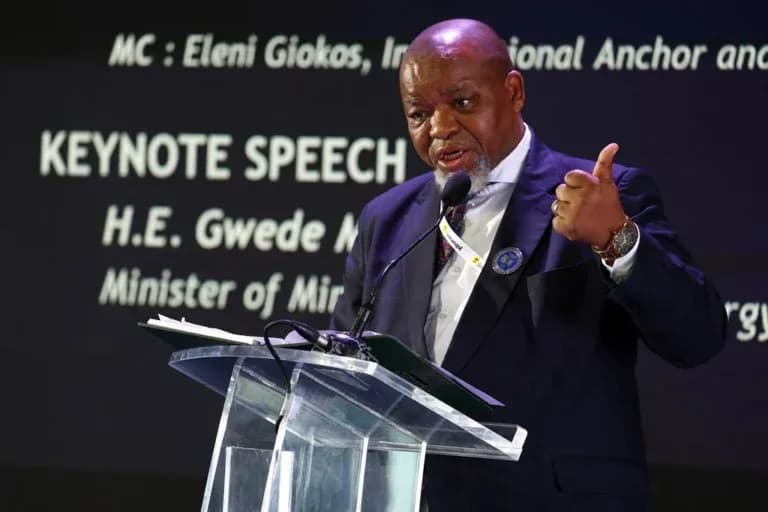
Mineral Resources and Energy Minister Gwede Mantashe, has called for a reduction in carbon emissions. Mantashe has long argued against being rushed into a just transition, citing the economic cost of a quick transition away from coal. Speaking at the Council for Geoscience Summit on Tuesday at the Durban International Convention Centre, Mantashe stated that
Mantashe reverses his position on carbon emission and declares energy transition as SA’s future
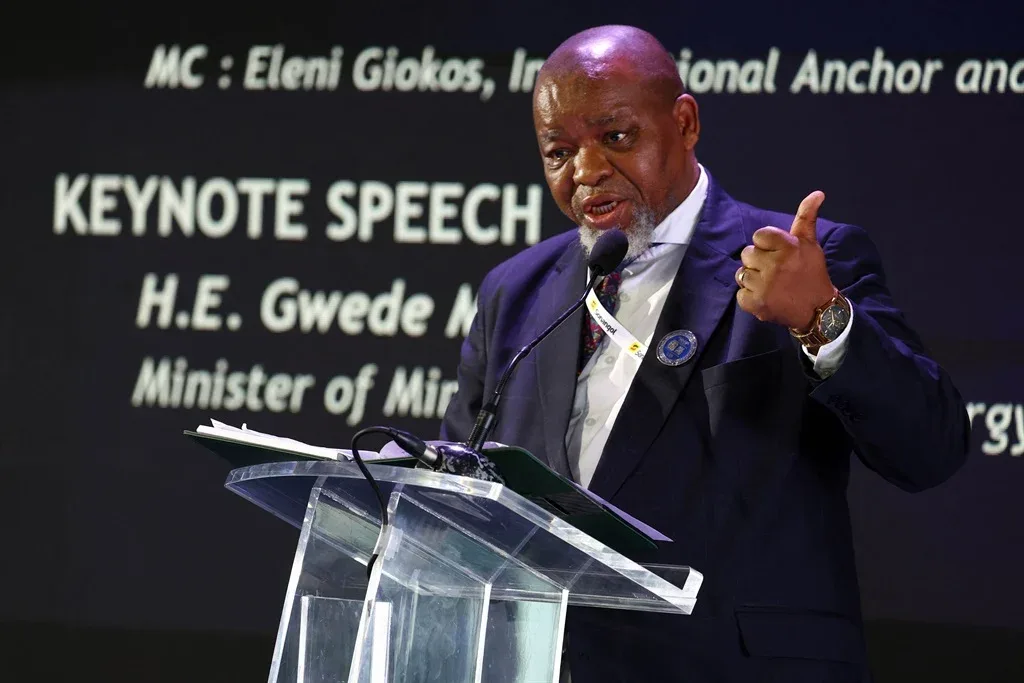
Mineral Resources and Energy Minister Gwede Mantashe, has called for a reduction in carbon emissions.
Mantashe has long argued against being rushed into a just transition, citing the economic cost of a quick transition away from coal.
Speaking at the Council for Geoscience Summit on Tuesday at the Durban International Convention Centre, Mantashe stated that an energy transition was the future for South Africa, and that the world’s economic trajectory demanded a change.
However, he added that coal and storage could still be a viable power source to consider.
“Our transition from high- to low-carbon emission might be achieved with coal as part of the solution, if the hypothesis of clean coal is proven,” he said.
Carbon-capture technologies involve capturing carbon emissions from industrial activity, such as power generation, and transporting them underground to be stored.
It is a type of carbon sequestration that involve removing CO2 from the atmosphere.
He was mostly upbeat about the power transition in front of a packed room of scientists, politicians, and other stakeholders, claiming that the Geoscience Act empowered the Council of Geosciences to conduct geological exploration.
“I am expecting them to work with the private sector to re-catalyse the exploration activities in the country, in line with the geological potential.”
Mantashe added: “As the world’s economic trajectory demands [a] new suite of minerals deemed to be critical minerals for [a] lower carbon footprint, there had never been a better time for the geoscience communities to work together.”
He stated that the geosciences communities must prepare “to unravel the possibilities of SA as a source of these minerals, advanced in the manner that optimises the benefit for the people of the country”
The role of the Council for Geosciences in carbon capture gives SA hope that the country’s energy transition program can be completed, according to Mantashe.
“Our commitment to the international protocol on climate change remains resolute.”
The Minister also mentioned the flooding in KZN, which killed nearly 50 people.
He stressed the importance of considering geotechnical conditions “prior to effecting such development” in infrastructure development.
“It is precisely in this context that the amendment of the Geoscience Act empowered the Council for Geosciences to review all geo-technical reports and provide appropriate advice to the local authorities in consideration of their infrastructure development programmes.”
Mantashe also stated that the Council for Geosciences had developed technology to track Zama Zama’s, or illegal miners.
He said that in the Council of Geosciences would “play a key role in providing geoscientific solutions to a number of challenges facing our country” in the future.
“It is expected that the council will play a technical role in addressing the urgent problems of water ingress and acid mine drainage that we have inherited as a result of historical unsustainable mining practices.
“Moreover, there are challenges of water scarcity in many parts of the country which need to be addressed as a matter of urgency.”
He claimed that illegal mining, colloquially known as Zama Zama’s, has engulfed the country.
“I have been consistent that this is a crime and there’s no room for such activity is South Africa. Accordingly, I appreciate the responsiveness of the council for geosciences in speedily developing illegal mining tracker technique using geoscientific techniques, which will detect illegal mining activities well in advance and communicate with the law-enforcement authorities in order to deal with such activities timely.”
Mantashe added that the Council for Geosciences is also actively involved in assessing the negative impacts of the mining industry and other human activities on our water resources.
Main Image:News24