Huawei becomes member of the Global Alliance for Literacy
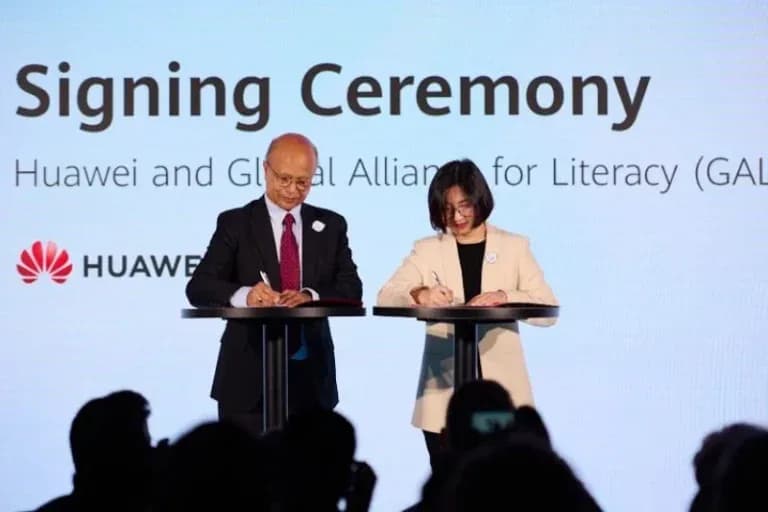
On Sunday, March 26, 2023, Huawei joined the United Nations Educational, Scientific, and Cultural Organization's (UNESCO's) Global Alliance for Literacy (GAL). It is the first private firm to join the GAL as an associate member. Huawei and the Unesco Institute for Lifelong Learning (UIL) have pledged to use technology to improve literacy in 30 countries.
Huawei becomes member of the Global Alliance for Literacy
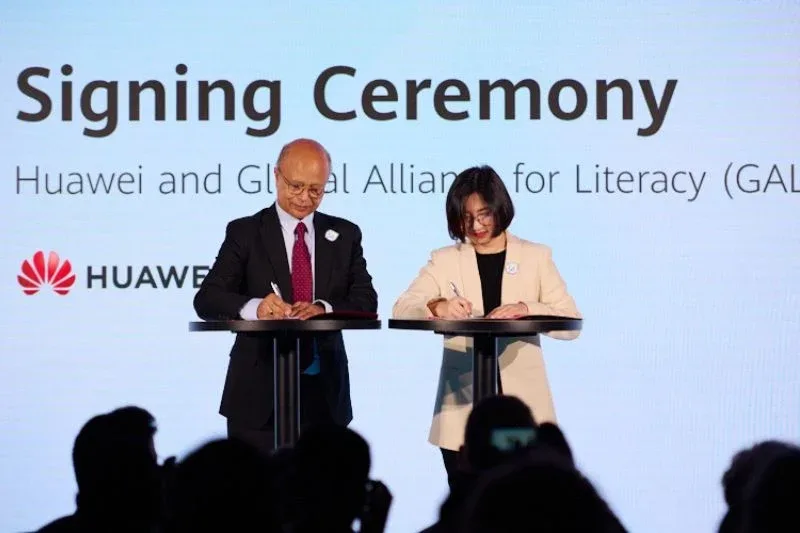
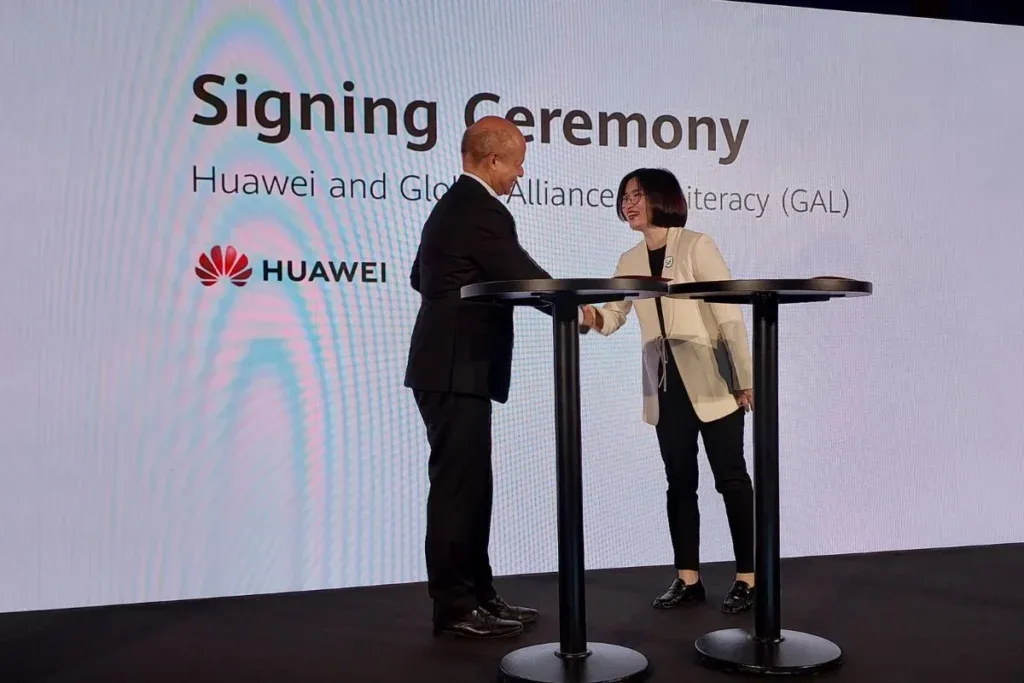
On Sunday, March 26, 2023, Huawei joined the United Nations Educational, Scientific, and Cultural Organization’s (UNESCO’s) Global Alliance for Literacy (GAL).
It is the first private firm to join the GAL as an associate member. Huawei and the Unesco Institute for Lifelong Learning (UIL) have pledged to use technology to improve literacy in 30 countries.
The deal was struck on the eve of the Mobile World Congress (MWC) 2023 in Barcelona at Huawei’s Seeds for the Future presentation.
Huawei’s investment will go towards expanding UIL’s current projects to improve educators’ use of technology in poor nations.
David Atchoarena, Director of Unesco’s Institute for Lifelong Learning, stated that the GAL was established to assist nations with poor literacy rates.
The GAL’s secretariat is run by the UIL.
“Literacy goes beyond reading and writing to encompass wider skills including digital competencies,” he said.
“Currently, GAL is a platform of 30 countries strongly committed to improving literacy for youth and adults and combat persistent literacy challenges.”
Atchoarena noted that Huawei’s creative learning skills will be a valuable asset to the Alliance.
“Our rapidly changing world calls for concerted efforts and strong partnerships to promote young talents and to achieve quality education and lifelong learning for all,” he said.
“Collaborative projects like ours will ensure that no one is left behind.”
Vicky Zhang, Huawei’s vice president of corporate communications, signed the agreement on the company’s behalf.
Zhang noted that as a prominent participant in the technology business, Huawei is responsible for developing ICT capabilities in all corners of the world.
“We are proud to join forces with UNESCO to better deliver on this responsibility,” she added.
John Omo, Secretary General of the African Telecommunications Union, agreed with Zhang.
“Today, more than 60% of Africa’s population is under the age of 25. By 2030, young Africans are expected to constitute 42% of global youth,” Omo said.
“I believe our youth can help solve the challenges of today as well as the challenges of tomorrow and I remain determined to help provide the skills and support for youth to be able to do that.”
The announcement of Huawei’s commitment is part of the company’s Seeds of the Future programme.
Huawei’s programme yearly gives digital training courses and scholarships to tens of thousands of academics. It also organises and supports tournaments that allow students to broaden their knowledge while also winning rewards.
The programme seeks to give ICT training to excellent students globally in order to increase their employability and understanding of the IT sector.
Continuous investment in the development of digital talent
Huawei’s Seeds for the Future project began in 2008, and since then, it has helped more than 2.2 million people in over 150 countries improve their digital abilities.
The IT behemoth stated in 2021 that it has invested $150 million (R2.7 billion) on the programme and planned to invest another $150 million by 2026.
Three million individuals are likely to benefit from the extra investment.
During her presentation, Zhang announced the development of an extended Seeds for the Future framework characterised by the abbreviation SEEDS:
- Surpass — Huawei aims to foster leadership through the initiative.
- Exploration — helping participants select the right career path, adapt to changes, and focus on growth.
- Employability — Zhang said Huawei provides online education to ICT professionals to help them keep up to date and remain competitive in the job market.
- Daring to challenge — challenging participants through the organisation and sponsorship of a wide range of tech competitions.
- Sustainability — bridging the digital divide by offering basic tech training to people of all ages and genders.