
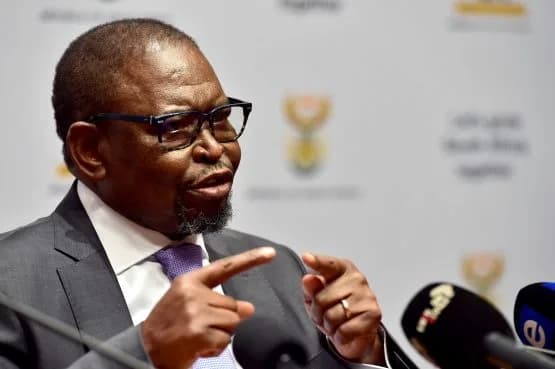
Finance Minister Enoch Godongwana to incorporate a credible debt-relief strategy
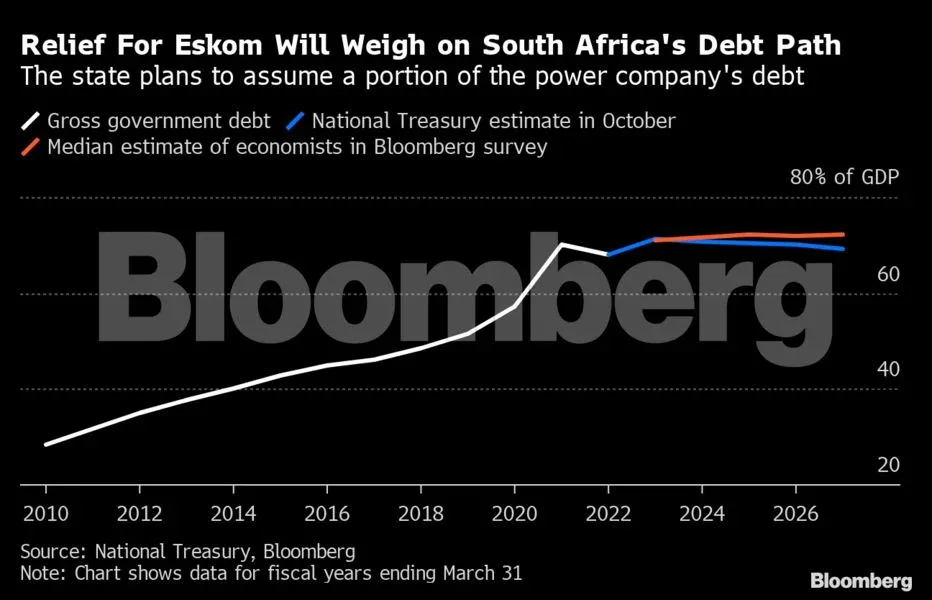
South African Finance Minister Enoch Godongwana is tasked with implementing a realistic debt-relief plan for the ailing state power provider into the national budget while also stabilising government finances in the face of unprecedented blackouts. According to the minister, the state would assume between one-third and two-thirds of Eskom's R400 billion obligations by October 2022.
Finance Minister Enoch Godongwana to incorporate a credible debt-relief strategy
South African Finance Minister Enoch Godongwana is tasked with implementing a realistic debt-relief plan for the ailing state power provider into the national budget while also stabilising government finances in the face of unprecedented blackouts.
According to the minister, the state would assume between one-third and two-thirds of Eskom’s R400 billion obligations by October 2022. The money and some of the transfer terms are expected to be published in his budget on February 22nd.
According to nine of the 17 analysts polled by Bloomberg, the government can afford to take half of the utility’s loan commitments without jeopardising attempts to cut the budget deficit and decrease debt.
Lowering Eskom’s obligations will enable the loss-making firm to generate funding for plant maintenance and grid strengthening. But, it would increase the state’s overall debt load of about R5 trillion, as well as debt-service expenses, which have been the fastest-growing spending line item for nearly a decade.
Godongwana has already stated that the National Treasury will make assistance reliant on Eskom reaching performance benchmarks, and that monies will be transferred in stages. He does not see the utility’s bondholders being asked to take haircuts, which would imply default.
The proposal “won’t necessarily overturn the apple cart, but if government debt is not carefully managed and Treasury fails to follow through on consolidating public finances, South Africa will likely struggle to avoid going off a fiscal cliff,” according to Oxford Economics Africa’s Jee-A van der Linde.
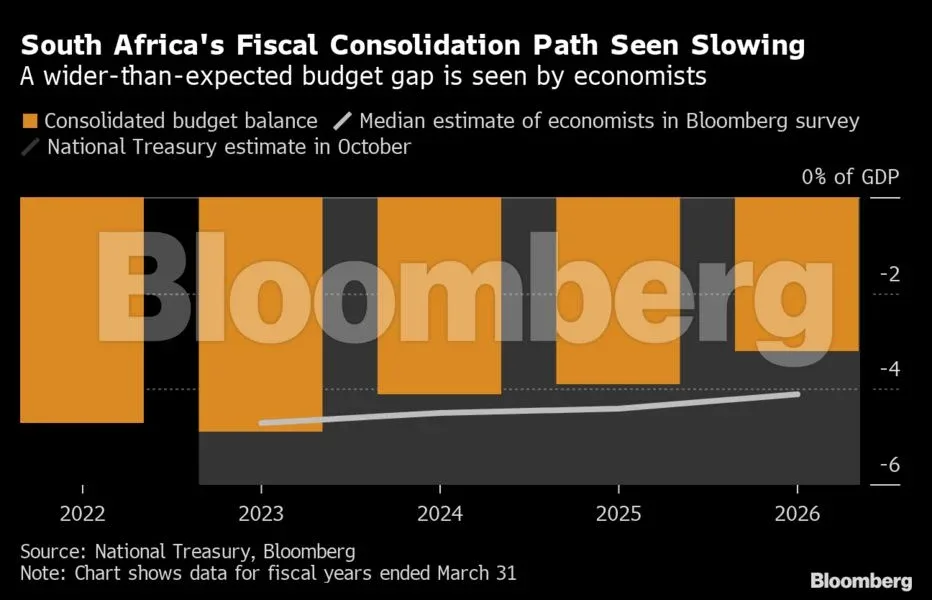
Record blackouts will make it more difficult for Godongwana to persuade investors that key fiscal measures such as the budget shortfall and primary balance would improve. The disruptions are costing the country up to R899 million per day, prompting the central bank to reduce its 2023 economic growth prediction to 0.3% from 1.1%.
The Treasury will alter its economic growth prediction, but doing so “too drastically” would be “unwise,” according to Annabel Bishop, chief economist at Investec Bank.
The Treasury “would do well to err on the side of caution and not collapse its economic growth forecasts as drastically as the South African Reserve Bank” she added, because doing so would exacerbate debt-to-GDP ratios and the anticipated health of government finances.
Salary cuts for state officials and increased welfare payments may potentially put pressure on the budget as the ruling African National Congress seeks to shore up support ahead of elections next year.
According to 78% of respondents in Bloomberg’s poll, the state’s wage bill is expected to exceed earlier budget forecasts, while 41% believe a basic income award would be revealed before the vote.
According to several opinion surveys, the ANC faces losing its national majority in 2024.
While South Africa has profited from windfall cash generated by increased commodity prices and mining company profits, major power outages and Transnet’s challenges in transporting items to seaport for export may limit future revenues.
Government assistance to mitigate food price increases, as well as tax advantages for businesses and people that produce their own electricity, may further obscure the budgetary outlook. According to 71% of economists questioned by Bloomberg, Transnet, which has exceeded its debt covenants, is also likely to need a rescue.
South Africa views primary budget balance as the most important fiscal anchor. More over half of the experts polled believe the deficit would be closed by 2025, a year later than the Treasury originally predicted.